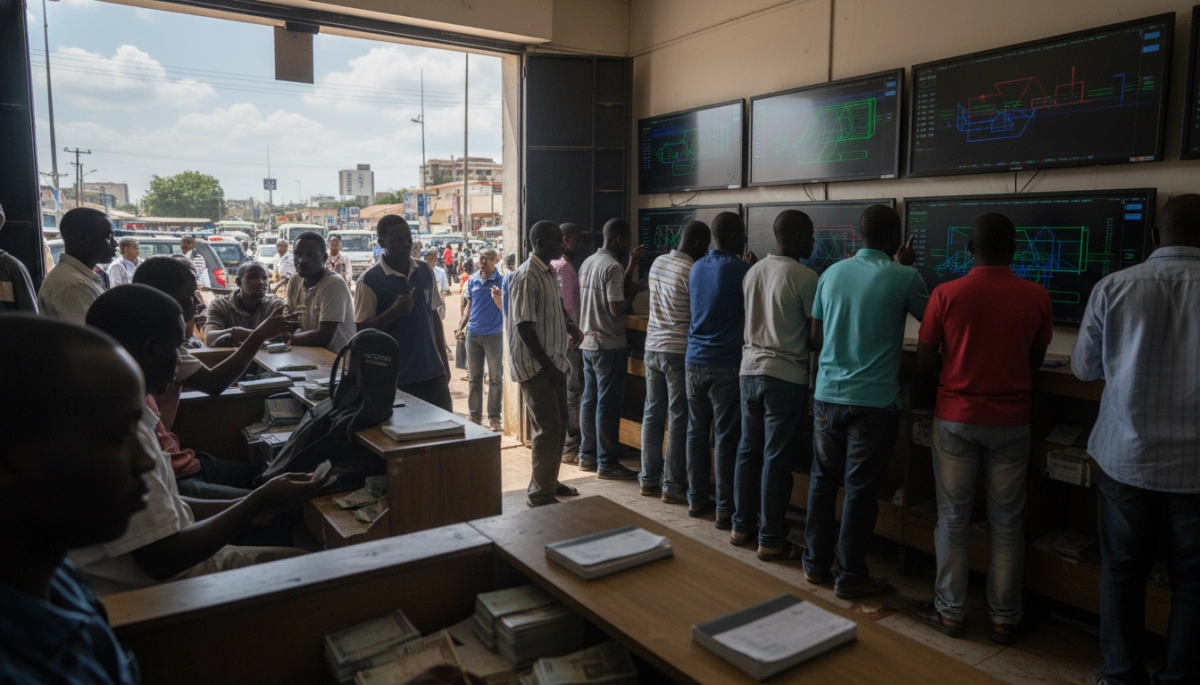

Why Most Tanzanian Bettors Are Solving the Wrong Problem
The most common question among active Tanzanian bettors is: which team should I back tonight? It is the wrong question. That framing puts all the focus on picking winners, when the actual problem is whether the odds on offer reflect the real probability of that outcome. A bettor who understands this difference is already operating at a different level from someone chasing tips on WhatsApp groups.
Bookmakers do not set odds to predict outcomes. They set odds to balance their liability and build in a margin that guarantees a return regardless of the result. That margin, often called the overround or the vig, is baked into every market before a single bet is placed. In Tanzania, where most bettors rely on a handful of local platforms, that margin is frequently higher than what bettors in European markets face. It is structural, and it shapes every single bet placed through a mobile money deposit.
The opportunity is not in finding better tips. It is in finding the moments when a bookmaker’s price is wrong relative to what the evidence actually suggests. That is what value betting in African sports markets means in practice.
How Bookmakers Price Markets They Know Less About
Bookmakers invest heavily in pricing the English Premier League. They have dedicated traders, deep data feeds, and years of market history to draw from. African domestic leagues, including the Tanzania Premier League, receive far less of that attention. When a bookmaker prices a match between Simba SC and a mid-table side, they are often working from limited data or automated models that treat African leagues as a lower-priority category.
This is where structural mispricings appear most frequently. The bookmaker’s model may not account for travel fatigue across Tanzania’s geography, squad rotation ahead of continental fixtures, or how a team performs on poor pitches in the wet season. These are factors a locally informed bettor can observe directly. The gap between what a bookmaker assumes and what a grounded analysis reveals is exactly where value betting in African sports markets becomes practical rather than theoretical.
This same logic applies to other African competitions on Tanzanian platforms. Leagues from Uganda, Rwanda, and parts of West Africa are often priced with even less precision. The data is harder to find, but so is the bookmaker’s confidence in their own numbers. That asymmetry matters.
The Difference Between a Good Pick and a Valuable Bet
A bettor can correctly predict that a strong team wins and still lose money over time if they consistently take odds that undervalue that outcome. Value exists when the implied probability built into the odds is lower than the actual probability a reasoned analysis produces.
This requires a shift in how bettors evaluate their slips. Instead of asking “will this team win,” the productive question becomes “is the probability of this outcome higher than what the odds suggest?” That single reframing changes the entire analytical process, from match selection through to stake sizing.
Reading Line Movement as a Signal, Not Just a Price
Most Tanzanian bettors look at odds as a static number. Professional value hunters treat odds as a conversation happening in real time. When a line moves, it signals where money is going, where the bookmaker is adjusting exposure, and occasionally where sharper information has entered the market.
On regional African matches, line movement tends to be slower and less efficient than on European fixtures. A team selection announced publicly, a key player ruled out, or a waterlogged training pitch flagged in local Swahili-language media can remain unpriced for hours on some platforms. That window is not unlimited, but it exists more reliably in African markets than anywhere else.
The practical approach is to track opening lines and compare them against prices closer to kick-off. A significant drift away from a team suggests bookmakers are taking liability on the other side. A line that holds steady despite heavy public backing often means the bookmaker is comfortable with their exposure. Neither pattern tells you what to bet in isolation, but both add context that gut feeling and tipster channels never provide.
Which Markets Expose the Most Bookmaker Uncertainty
Not all bet types are equal from a value perspective. Match result markets on prominent fixtures are the most heavily monitored and hardest to beat consistently. The real inefficiencies in African sports betting tend to surface in markets that attract less attention from the bookmaker’s risk team.
- Total goals markets on Tanzanian and East African domestic fixtures, where scoring patterns differ significantly from the European averages bookmakers often use as a baseline
- Handicap lines on continental club competitions involving Simba SC or Yanga SC, particularly in away legs where home advantage in other African nations is frequently underestimated by automated pricing models
- Half-time result markets, which require granular knowledge of how specific teams set up tactically in the opening period and are rarely modeled with the same depth as full-match outcomes
- First goalscorer and anytime scorer markets, where squad rotation in domestic leagues creates genuine pricing gaps that a well-informed local observer can identify before the bookmaker adjusts
The common thread is that these markets demand contextual knowledge the bookmaker is less likely to have. A market does not have to be obscure to be mispriced. It simply has to sit outside the area where the bookmaker has concentrated their analytical resources.

Building a Personal Probability Framework Without Complex Mathematics
The core idea behind implied probability is straightforward. If a bookmaker prices a team at odds of 2.50, they are implying roughly a 40 percent chance of winning after accounting for their margin. If your honest assessment suggests that team wins closer to 55 percent of the time under similar conditions, you have identified a gap worth considering.
Constructing that personal probability does not require statistical software or paid data services. It requires a disciplined habit of asking the right questions before every bet. How has this team performed at this venue over the past two seasons? Is the opposition missing key defensive players? Does this fixture fall at a point in the calendar where the stronger side typically rotates? What does recent head-to-head history look like on comparable surfaces?
The goal is not to produce a precise number. It is to develop a consistent internal process that separates your estimate from the bookmaker’s implied probability and gives you a principled reason to act or walk away. Bettors who do this even informally begin to recognize the types of matches where their knowledge base genuinely outpaces the pricing. That pattern recognition, built through evidence rather than instinct, is what makes African domestic markets a more productive hunting ground than the heavily scrutinized European fixtures that dominate most Tanzanian betting slips.
Turning a Consistent Process Into a Long-Term Edge
None of what has been outlined here produces results after a single weekend of matches. That is precisely the point. Value betting in African sports markets is not a shortcut to quick returns. It is a methodology that compounds over time as your judgment becomes more calibrated, your records more detailed, and your understanding of specific markets more refined. The bettors who sustain results across months and seasons are not the ones who found a better tipster. They are the ones who built a repeatable process and trusted it even when individual results did not immediately confirm it.
The most practical starting point for any Tanzanian bettor is to keep a simple record of every bet placed. Not just the outcome, but the reasoning behind it. Why did you estimate the probability differently from the bookmaker? What information did you hold that the price did not seem to reflect? Reviewing those notes over thirty or fifty selections reveals patterns that no amount of instinct can surface on its own. You begin to see which market types your analysis genuinely outperforms, and which ones you are convincing yourself about after the fact.
Discipline around stake sizing matters equally. A common error among bettors who start thinking in terms of value is to overcommit when they feel highly confident. Confidence is not the same as edge. Even a well-founded value bet carries real uncertainty, and a single over-sized losing stake can distort months of careful decision-making. Keeping stakes proportional and consistent protects the process from the emotional volatility that erodes it.
For those ready to take the analytical side seriously, resources like Football Data offer historical results and odds data across multiple leagues that can support the kind of backtesting that turns a hypothesis about a market into something grounded in evidence.
The broader point is this: Tanzanian bettors have a genuine informational advantage in markets that bookmakers price with less precision. That advantage disappears the moment it is wasted on impulse selections, oversized accumulators, or tips from someone with no documented record. Used systematically, the same local knowledge that feels ordinary to someone who follows the Tanzania Premier League closely is exactly the kind of edge that professional value hunters spend years trying to acquire in markets where it no longer exists. The gap is there. Whether it gets exploited thoughtfully or squandered through habit is entirely within the bettor’s control.