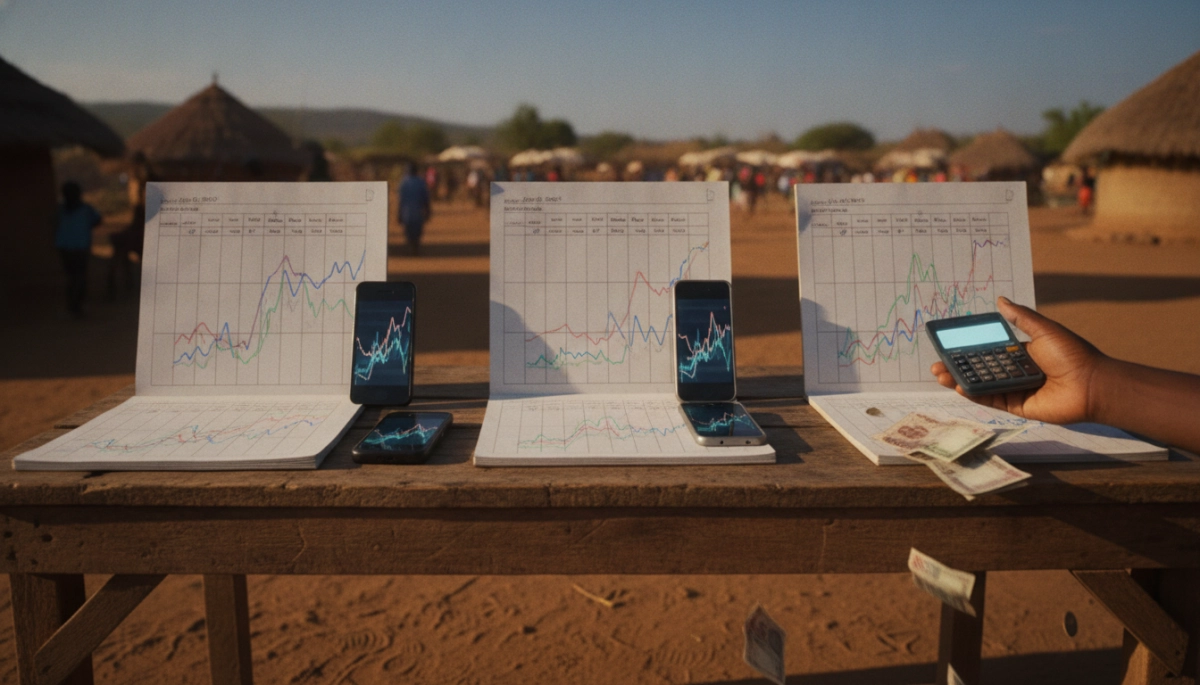

The Information Gap That Makes Local League Betting So Much Harder
Most Tanzanian bettors who have tried betting on the Tanzania Premier League already know something feels off. The odds look reasonable, the teams are familiar, and the matches are happening close to home. Yet the results are harder to predict than a mid-table Premier League fixture between two clubs they barely follow. That is not coincidence or bad luck. It is a structural problem rooted in how local football markets are built.
European leagues generate enormous volumes of publicly available data. Team form, injury reports, expected goals, pressing statistics, and squad depth charts are freely accessible across dozens of platforms. Tanzania Premier League betting operates in a different environment entirely. Detailed match statistics are inconsistently published. Injury news rarely appears before kickoff. Coaching changes and squad rotations are often confirmed only through word of mouth or post-match commentary. The information asymmetry is significant.
This does not mean local league betting is unbeatable. It means the edge available to a prepared bettor is different in nature, harder to access, and requires a different approach to find.
How Thin Liquidity Distorts Odds on Tanzanian Matches
Odds on European matches reflect millions of bets placed across global markets. When money flows heavily on one side, bookmakers adjust quickly. The resulting odds are a reasonably calibrated reflection of genuine probability, stress-tested by volume.
Tanzania Premier League matches attract far less betting volume. Bookmakers set opening odds using limited data, and because fewer bettors are actively pricing the market, those odds are slower to correct when wrong. This creates wider inefficiency, which sounds like opportunity but carries a serious risk: the bookmaker’s margin does not shrink because the market is thin. Local markets often carry higher overrounds than European fixtures precisely because bookmakers take on more risk with less information.
The odds on a Tanzanian league match can therefore be simultaneously inefficient and expensive. The line might be poorly set, but the cost of being wrong is higher than on a more liquid market. Bettors who assume inefficiency automatically translates to value are misreading the situation.
Why Data Scarcity Is Not the Same as a Level Playing Field
A common assumption is that if everyone has access to the same limited information, the playing field is level. In practice, it is not. Bookmakers still hold a structural advantage through margin, and bettors with genuine local knowledge — consistent access to team news, training ground information, and understanding of individual coaching tendencies — operate with a real edge over those relying only on published results.
This kind of granular knowledge is unevenly distributed and difficult to verify. Building a usable analytical picture of Tanzania Premier League football requires sourcing information from multiple places and assembling it into something coherent. That process is where the real analytical work begins.
Building Your Own Data Infrastructure From Scratch
The absence of organized statistical platforms for Tanzanian football does not excuse a lack of rigor. It simply relocates the effort. Someone serious about this market has to build their own reference base from whatever raw materials are consistently available. This is time-consuming work, but it compounds. The bettor who has tracked match results, goal timings, and home versus away performance across a full season is in a genuinely different position from one who consults only table standings and recent form.
The starting point is a personal match log. Every fixture result — including margin of victory, home or away context, and any noted disruptions such as postponements — should be recorded in a consistent format. Spreadsheets work well. Over time, patterns emerge that are invisible when looking at individual results in isolation. Specific clubs may be consistently strong early in the season and fragile in the run-in. Others may carry an exaggerated home advantage that bookmakers are not fully pricing.
Social media, particularly active football fan communities and local sports journalists who cover the league regularly, is often the most reliable source of pre-match team news in the absence of formal press conferences. Identifying three or four dependable local sources and monitoring them consistently before each betting decision is a practical substitute for the injury feeds that Premier League bettors take for granted. The information is often there. It just requires knowing where to look.
Narrowing Your Focus to Gain Genuine Depth
One of the most effective adjustments a Tanzanian bettor can make is deliberately narrowing the number of clubs they follow in meaningful detail. Broad market coverage might feel like it creates more opportunities, but in a data-scarce environment, shallow knowledge spread across many teams produces false confidence without the substance to support it.
Choosing four to six clubs to track closely throughout a season allows for the kind of granular understanding that creates genuine informational advantage. This means following coaching decisions over time, understanding which players are genuine contributors, identifying how a team responds to congested fixture periods, and recognising when external pressures are likely to affect performance. None of this appears in a statistics dashboard. It accumulates through sustained attention.
When a betting opportunity involves one of those closely tracked clubs, the quality of judgment is categorically different from a bet placed on passing familiarity. Against a bookmaker whose local market odds are set by generalist analysts working with limited data, that depth of understanding is where the real edge lives.
Rethinking Which Markets Are Actually Worth Entering
Beyond which matches to bet on, the question of which markets to use is often underexamined. Tanzanian bettors frequently default to match result markets because they are most familiar, but in a thin liquidity environment with unreliable team news, this is often the worst place to look for value. It attracts the most volume, so bookmakers price it most carefully, and a single undisclosed injury or tactical surprise can swing the outcome entirely.
Markets with structural predictability tend to hold up better in low-information environments. These include:
- Both teams to score markets, which depend less on identifying the winner and more on understanding the defensive and attacking tendencies of both sides over a sustained period
- Over and under goal totals, particularly when a bettor has detailed knowledge of how a specific team sets up in certain fixture types
- First half versus full match result comparisons, which can expose clubs with consistent patterns in how they start or finish games
- Handicap markets on fixtures where one team has a reliably significant quality gap that the match result market does not fully reflect
None of these markets eliminate the inherent difficulty of betting on local football. But they shift the analytical requirements toward areas where sustained observation and structured record-keeping offer a more durable advantage.

Playing a Long Game in a Market That Rewards Patience
The honest reality of betting on Tanzanian local league football is that there is no shortcut that compensates for structural disadvantage. The data gaps are real, the odds are expensive relative to the information available, and the liquidity environment means inefficiencies exist alongside risks that casual bettors consistently underestimate.
What does work is a fundamentally different relationship with the market — built on narrow focus rather than broad coverage, on accumulated personal data rather than borrowed statistics, and on selecting markets that align with what can actually be known. The edge available in Tanzania Premier League betting is real, but it is earned incrementally through methodical record-keeping and sustained attention that most bettors are unwilling to maintain across a full season.
Bankroll discipline matters more in thin markets than anywhere else. Because overrounds are wider, individual bet sizes relative to total bankroll should be more conservative, not less. A string of losses on poorly priced local markets can erode a bankroll faster than an equivalent run on European fixtures. Flat staking or a proportional staking model applied consistently across carefully selected bets will always outperform impulsive volume over any meaningful sample size.
It also helps to benchmark honestly. Tracking not just wins and losses but closing odds relative to odds taken, and comparing expected value across bet types over time, reveals whether an approach is generating genuine edge or simply riding variance. Football Data offers a useful model for how systematic result tracking and odds logging can be structured, even if the platform focuses on European leagues. The methodology is transferable, and building a similar personal database for Tanzanian fixtures is entirely achievable with modest effort applied consistently.
The bettors who find the most durable success in this market treat it less like a casual pastime and more like a research discipline. They are patient with their own learning curve, selective about when conditions justify a bet, and honest about the difference between a well-reasoned position and a hopeful guess dressed up as analysis. In a market where most participants are working with thin information and paying high margins to act on it, that kind of disciplined clarity is the most reliable edge available.