
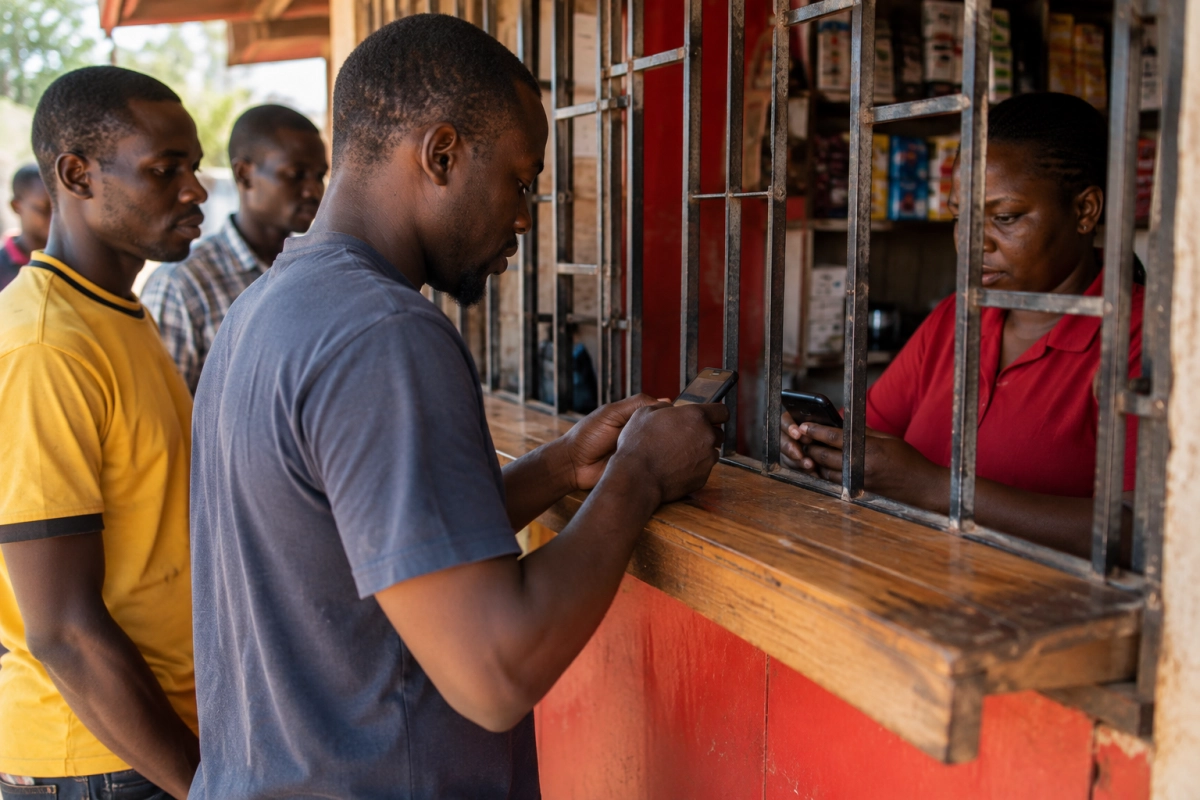
Why Your Wallet’s Mechanics Matter More Than You Think
Most Tanzanian bettors assume their losses come down to picks, form, or bad luck on a last-minute goal. Few stop to consider that the transaction mechanics of M-Pesa, Tigo Pesa, and Airtel Money are quietly shaping how much they stake, when they chase, and how they recover from a bad week. Mobile money betting was never designed as a neutral payment rail sitting behind the platform. It actively shapes behavior.
A bettor funding an account through a bank card in Europe experiences almost no friction between deciding to bet and placing the stake. In Tanzania, that same decision passes through network float limits, agent liquidity, confirmation delays, and small but repeated transaction fees. Each of those steps adds a micro-decision point that card-based markets simply do not have, and those extra decision points accumulate into staking habits that look very different from what the global betting literature assumes.
The Mental Math Behind a 1,000 Shilling Minimum Deposit
Operators across Tanzania commonly set mobile money minimum deposits around TSh 1,000, a figure low enough that almost anyone with airtime money can place a bet. That accessibility is often framed as a convenience, but it also changes how bettors think about stake sizing. When the entry point is this low, round numbers become the default unit of thought rather than a calculated percentage of bankroll.
A bettor working from a card-linked account in a European market tends to think in terms of total balance and risk percentage, because the deposit itself carries no real friction. A Tanzanian bettor funding through M-Pesa or Tigo Pesa is more likely to think in terms of what is easy to type into a USSD menu: 1,000, 2,000, 5,000. This is not a minor stylistic difference. It means stakes are frequently set by convenience of input rather than by any deliberate read of odds or value, which quietly erodes the discipline that bankroll management depends on.
Round-Number Staking as a Hidden Bias
Round-number staking feels harmless, but it introduces a bias that has nothing to do with the match itself. A bettor who would stake 7,500 shillings based on genuine conviction in a bet often rounds down to 5,000 or up to 10,000 simply because those numbers sit naturally on the deposit screen. Over dozens of bets a month, that rounding behavior compounds into a bankroll pattern driven by interface habits rather than analytical judgment.
Where Network Float and Transfer Delays Enter the Equation
Deposit minimums are only the first layer. Behind every mobile money transaction sits agent float, the physical cash and e-value an agent needs on hand to process your deposit or withdrawal. When float runs low in a ward or during peak hours, transactions slow down or fail outright, and that delay changes betting behavior in ways a card transaction never would.
Understanding how these delays interact with withdrawal timing, fee tiers, and the psychological pull of a losing streak requires looking more closely at what happens on the other end of the transaction, when a bettor is trying to get money out rather than in.
The Withdrawal Delay That Changes How Winners Behave
Depositing into a betting account is almost always the fast half of the transaction cycle. Pulling winnings back out is where the friction really shows itself. Operators typically process withdrawal requests within minutes on their end, but the money still has to move through the mobile network operator’s settlement layer before it lands as usable e-value, and that step is where delays of ten minutes, an hour, or occasionally longer start to matter.
A card-based bettor in a market with instant bank transfers rarely has to think about the gap between a win and access to that money. A Tanzanian bettor does, and that gap changes behavior in a specific way: many winners simply rebet before the withdrawal has even cleared, because the money is visible inside the betting wallet but not yet frustrating enough to withdraw. The delay that should encourage cashing out often does the opposite, keeping funds inside the platform’s ecosystem a little longer than the bettor originally intended.
Withdrawal Fee Tiers and the Temptation to Let It Ride
Layered on top of network delay is the fee structure itself. Mobile money withdrawal fees in Tanzania are tiered by amount, which means pulling out small sums repeatedly is proportionally more expensive than withdrawing a single larger amount. A bettor who wins 15,000 shillings across three separate bets faces a real cost incentive to leave the money in the betting account and consolidate it into one future withdrawal rather than cash out each time.
That incentive sounds like sound financial logic, and in isolation it is. But it also means the platform, not the bettor, often ends up holding winnings for longer than a card-based equivalent would allow, simply because the fee math discourages frequent small withdrawals. The result is a quiet nudge toward continued staking that has nothing to do with confidence in the next match and everything to do with avoiding a second or third withdrawal charge.
Agent Liquidity and the Geography of Staking Behavior
Float scarcity is not evenly distributed. Bettors in Dar es Salaam’s busier commercial wards generally experience fewer liquidity hiccups than those in smaller towns or rural trading centers, where a single agent might serve an entire ward with limited cash reserves. This geographic unevenness means two bettors with identical bankrolls and identical analytical skill can end up with meaningfully different staking rhythms purely because of where they happen to be transacting.
A bettor in an area with unreliable float learns, often without articulating it, to deposit larger sums less frequently rather than risk a failed transaction mid-match when odds are moving. This produces a lumpier staking pattern than the steady, transaction-light rhythm typical of card-based bettors, and it is a pattern shaped entirely by local cash infrastructure rather than by any strategy a sportsbook or tipster would recognize.
Rethinking Bankroll Discipline for a Mobile Money Reality
None of this means Tanzanian bettors are undisciplined or that mobile money is a flawed system. It means the discipline required looks different from the models most betting guidance is built on. Advice written for card-linked, instant-settlement markets quietly assumes frictionless deposits and withdrawals, an assumption that simply does not hold when float scarcity, tiered fees, and settlement delays are part of every transaction. Applying that imported advice without adjustment is itself a source of leaks that have nothing to do with reading form or odds correctly.
A more realistic approach starts with treating the transaction layer as part of the strategy rather than background noise. That means setting stake sizes as a deliberate percentage of bankroll rather than whatever rounds neatly on a USSD screen, withdrawing winnings on a schedule rather than waiting for an arbitrary threshold to offset fees, and building in a buffer for agent float delays before kickoff rather than during it. None of these adjustments require sophisticated tools, only an honest look at how money actually moves through the system a bettor is using. Resources like the Gambling Therapy support network also offer practical frameworks for bettors who notice these mechanics nudging their staking habits further than intended.
The platforms are unlikely to change their float dependencies or fee tiers any time soon, and there is no reason they should, since the mobile money infrastructure works well for the vast majority of everyday transactions it was built to serve. What can change is a bettor’s awareness of how that infrastructure quietly writes some of the rules of the game before a single odds line is even considered. Understanding that distinction is, in the end, the real edge.