
Why live betting can give you an edge as a Tanzanian bettor
When you bet in-play, you trade on information that wasn’t available pre-match. For Tanzanian bettors, live markets often present clearer edges: local leagues and regional games have slower-moving odds, while international fixtures react quickly to game events. That gap creates opportunities if you know what to watch. In-play betting tactics are about reading momentum, spotting market overreactions, and protecting your bankroll when things move fast.
You’ll benefit from familiarity with local match rhythms (for example, how teams in the Tanzanian Premier League handle substitutions or late game tactics) and from reliable live feeds. Mobile connectivity and payment methods such as M-Pesa make it easy to act quickly — but speed without a plan is how you lose. The goal is to combine quick observation with disciplined betting tactics so each live bet is intentional.
What I watch in the first 15 minutes before placing a live bet
The opening minutes set the tone. When you’re watching a match and considering a live wager, run through a short checklist to separate noise from signal. These are signals I consistently use to decide whether to stake money in-play.
- Tempo and intent: Who’s pressing? High early pressing and repeated attacks on one flank often lead to corners and shots — useful if you like over/under or corners markets.
- Shots and chances created: Two or three shots on target in the first 10–15 minutes are a stronger predictor than possession stats. If the attacking team keeps creating chances, the in-play odds for their next goal may be mispriced.
- Defensive structure and errors: Repeated defensive mistakes or slow centre-backs increase the value of markets such as “next goal” or “over 0.5 second-half goals.”
- Referee style and fouls: A card-happy ref can change game flow; if cards or free-kicks are frequent you might avoid markets vulnerable to stoppages or target set-piece bets.
- Weather and pitch conditions: Heavy rain or a poor surface in local stadiums often favors direct play and fewer technical attacks — adjust your bet types accordingly.
How I read odds movement and market reactions live
Odds are where the market’s sentiment lives. Rapid drift can mean a smart move by sharp bettors or simply a bookmaker balancing liability. Conversely, sudden shortening on a team after a minor event (like a yellow card) can be an overreaction. You want to spot when odds shift without a corresponding change in objective match indicators (shots, corners, possession in dangerous areas).
- Compare odds across operators quickly — value often exists where local markets react slower.
- Watch for liquidity: thin markets can swing wildly; limit stakes in those situations.
- Use small, probing bets to test whether a movement is sustained before committing a larger stake.
With these early checks in place you’ll avoid many common live mistakes; next, I’ll show the specific bet types and staking methods I use live to convert those observations into consistent returns.

In-play bet types I favour and why
When I decide to stake live, I pick markets that match the signal I’m seeing — not ones I feel like playing. These are the go-to bet types I use most often and what I look for before taking a position.
– Next goal / next team to score: My top live market. If a team consistently penetrates the final third, forces corners or the keeper is exposed, the next-goal odds can be very mispriced for a short window. In Tanzanian matches this is especially true when away teams sit off early; a sustained spell of pressure often means good value for a few minutes.
– Over/under (including Asian totals): I use these when shot volume changes. Two or three clear chances in quick succession lift the value of over 0.5 or 1.5 for the next period. Asian lines help manage variance — I prefer them in thin markets where a push is acceptable.
– Corners and set-piece markets: Local games often produce predictable corner sequences when one side dominates a flank. If a team is repeatedly crossing from one side, I size up corner markets rather than full-match goal markets.
– Both teams to score (BTTS): This is a market I target when both keepers look shaky or when a slow-starting favourite suddenly opens up after substitutions. It’s also useful late in games where a trailing side commits numbers forward.
– Asian handicap / draw no bet: If the pre-match implied gap was small but the underdog is dictating play, I’ll take a small AH stake to capture the swing with limited downside.
I avoid multi-leg live parlays because correlated events (a team pushing for a goal also concedes space) inflate bookmaker margins. Instead, I place single, focused bets sized to edge and liquidity.
My staking plan: probing, scaling and limits
Live betting is rushed; discipline is what separates profit from fun. I use a conservative unit system and three practical rules to govern size.
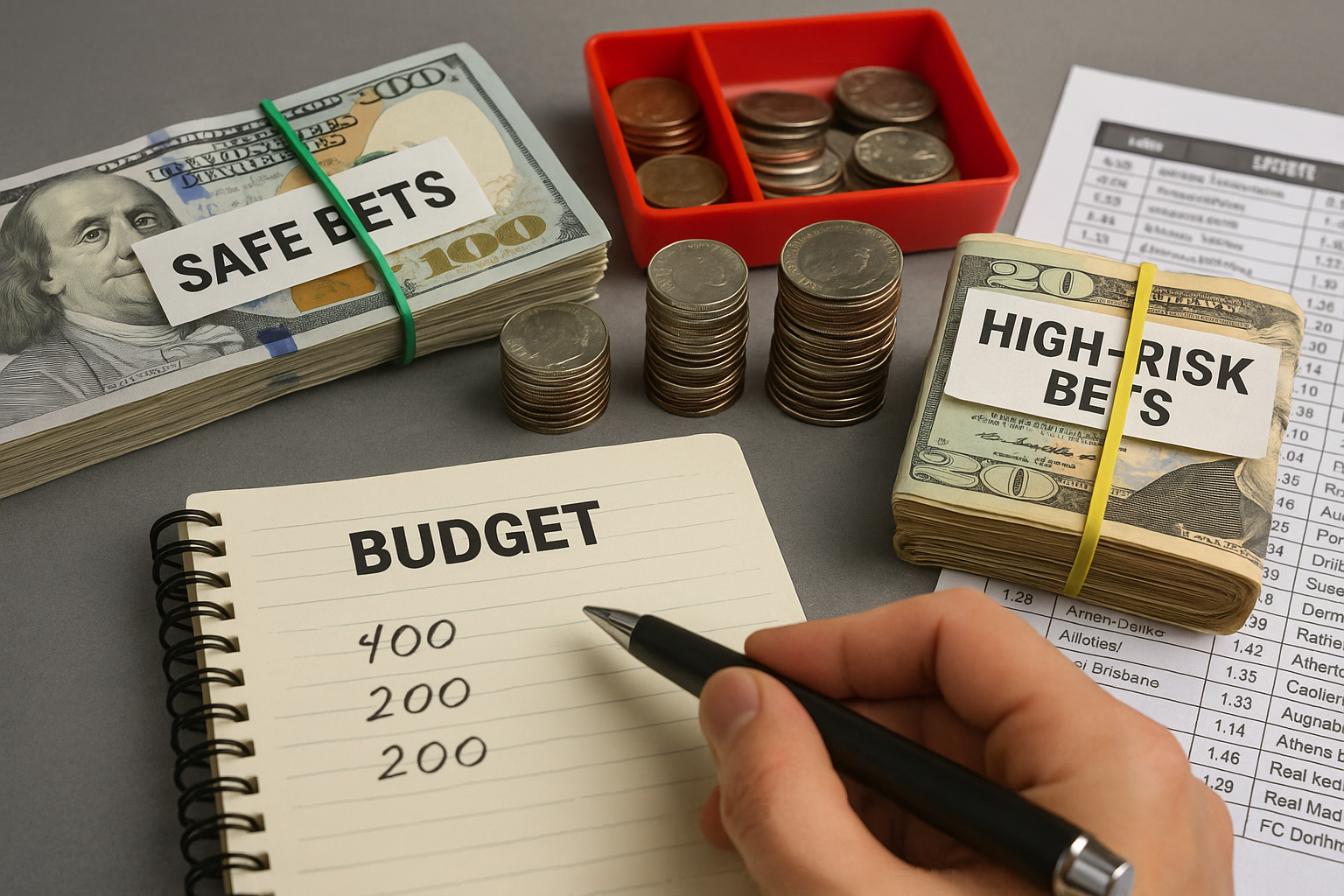
1. Fixed live unit (1–2%): I assign a live betting bankroll and a fixed unit equal to 1–2% of that. Bigger perceived edges might get 2–3 units, but rarely more. This keeps any single match from hurting my overall book.
2. Probing bets and scaling in: When odds move sharply I start with a probing bet (0.5–1 unit). If the market confirms (sustained pressure, repeat shots, tactical change) I scale in with another 1–2 units. This laddering lets me buy confirmation without overcommitting.
3. Stop-loss and session limits: I set a maximum loss per match and per live session (for example, 4–6 units). If I hit it, I step away. I also restrict the number of live bets per game — usually no more than three — to avoid overtrading.
I avoid chasing and never increase size after a loss. Where available, I use quick hedges or cash-outs to lock a profit if the market swings wildly (or if a late red card makes a result unlikely). On mobile with M-Pesa I can execute hedges quickly — use that speed, but only when the math makes sense, not out of panic.
Common live traps I deliberately avoid
Some mistakes are loud and obvious; others creep in. These are behaviors I actively guard against.
– Betting on commentary or emotion: If you’re reacting to loud punditry or crowd noise rather than objective indicators (shots, dangerous possession), step back.
– Over-reacting to single events: A deflected shot or soft card doesn’t always change the expected goals profile. Wait for follow-up evidence.
– Excessive late-game gambling: After 70–75 minutes markets become noisy. I only engage late if there’s a clear structural reason (e.g., tired defence, desperate chasing side).
– Ignoring liquidity: If odds shift but there’s thin market depth, reduce stakes or sit it out.
Stick to signals, size sensibly, and let the market prove your read before committing more. In the next part I’ll walk through live examples and show how I convert these tactics into real bets.

Putting tactics into practice
-
Example — First 12 minutes: Home side presses down the left, three corners and two shots on target. Action: place a small probing stake on the favourite to score next (0.5–1 unit); if pressure continues, scale in one unit.
-
Example — Midway substitution: A tired full-back is replaced, and the opponent immediately targets that flank with crosses. Action: consider a corner or set-piece market rather than a full-match goal bet, using Asian lines if liquidity is thin.
-
Example — Late-game chasing: Trailing team commits numbers after 75 minutes and the leaders are visibly fatigued. Action: a modest BTTS or over 0.5 second-half goal stake can capture the shift, but obey session limits and stop-loss rules.
Final thoughts for live bettors
Live betting rewards preparation, calm execution and the willingness to learn from each session. Treat every in-play stake as an experiment: track outcomes, refine which signals work in Tanzanian leagues, and keep your bankroll rules sacrosanct. Use trusted real-time feeds and comparison tools — for example, SofaScore live stats — to verify the on-field picture before you act. Above all, protect your capital, bet with discipline, and focus on small, repeatable edges rather than one-off gambles.
Frequently Asked Questions
How much of my bankroll should I allocate to live betting?
Allocate a separate live betting bankroll and size individual live units conservatively — typically 1–2% of that live bankroll per unit. Limit session losses (for example 4–6 units) and avoid increasing stake size after losses.
Which live markets are most reliable for Tanzanian matches?
Markets that respond to short-term pressure tend to be most useful: next goal, corners/set-pieces and short-term over/under or Asian totals. Choose markets that match the on-field signal you observe rather than preconceptions about the teams.
How do I avoid common emotional mistakes during in-play sessions?
Use simple rules: probe with small bets before scaling, cap the number of live bets per game, step away after hitting your loss limit, and ignore noisy commentary. Record decisions and outcomes to spot emotional patterns and correct them over time.