The Moment Your Stream Shows the Goal, the Odds Already Changed
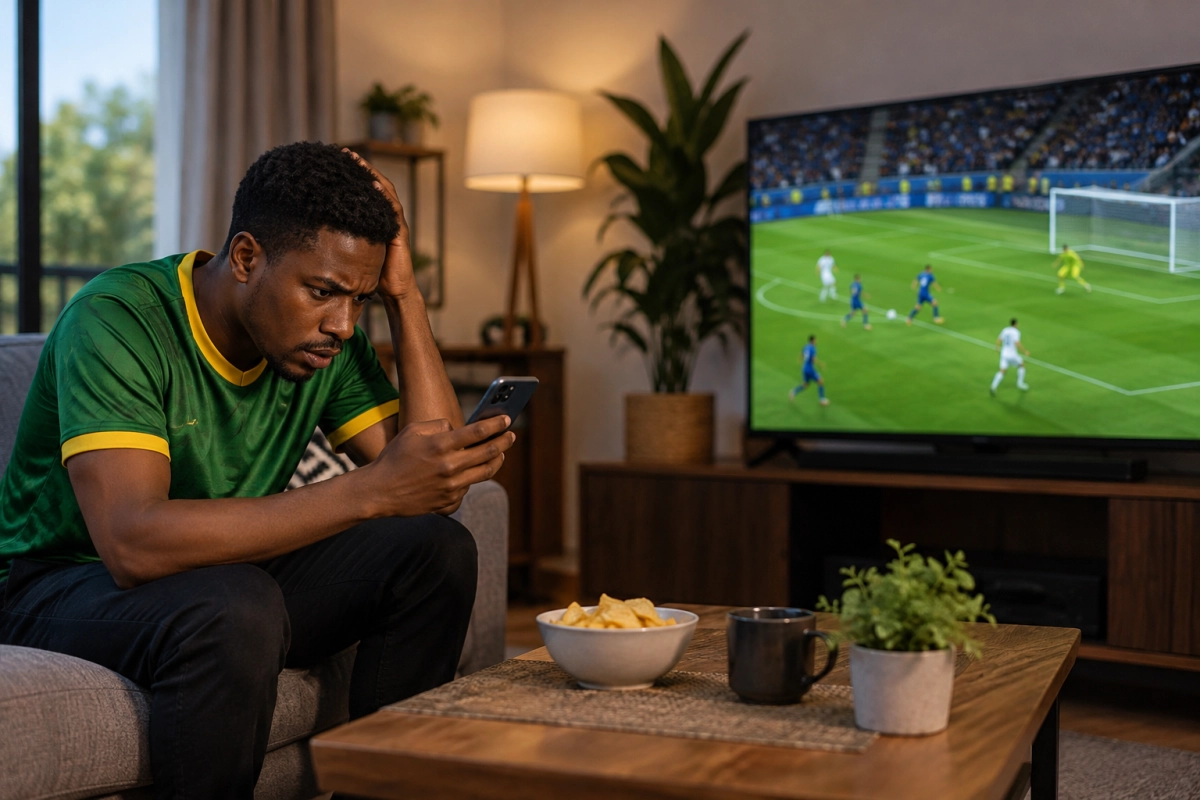
You are watching a match on your phone, the ball crosses the line, and you reach for your bet slip to back the next goal at the old price. By the time you tap confirm, the odds have already shifted, or your bet gets rejected outright. This is not bad luck or a slow connection. It is a structural feature of how in-play football betting works, and it affects Tanzanian bettors more than most.
Every live broadcast, whether it reaches you through a satellite decoder or a mobile streaming app, carries a built-in delay. The bookmaker, on the other hand, is pricing the match off a direct feed that shows the action as it happens, with none of the buffering or compression that slows down what you see on your screen. That gap between what you watch and what the trader sees is the core problem behind every frustrating in-play bet you have ever placed.
How Far Behind the Action Your Stream Really Is
Broadcast delays are rarely trivial. TV and app streams typically lag the real match action by 30 to 90 seconds, and glass-to-glass latency on many streaming platforms can stretch to 45 or 60 seconds depending on the device and network conditions. Satellite pictures lag the stadium by a handful of seconds, but mobile app streams often lag by closer to a full minute, and bookmakers add their own short acceptance delay on top of that before confirming any bet.
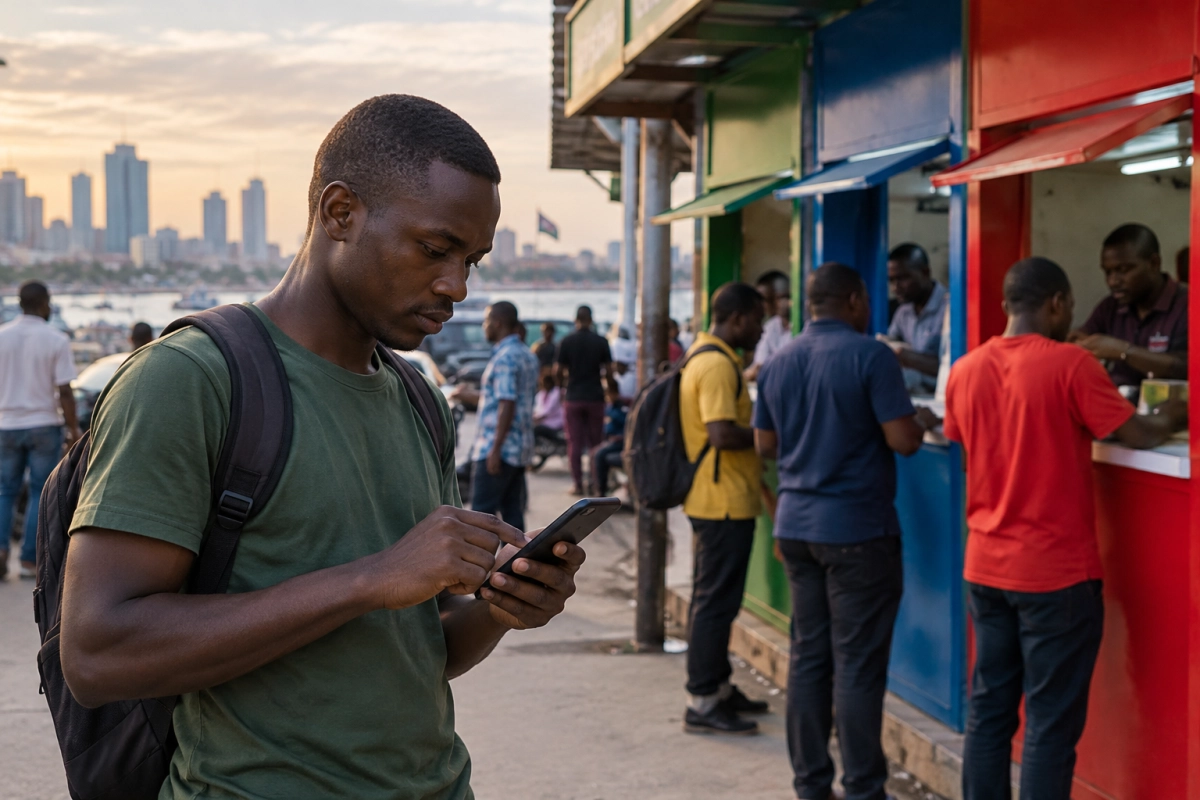
In Tanzania, this gap is often wider than the global average suggests. Mobile network data shows Tanzania ranked 94th globally in the Speedtest Global Index for mobile performance, with a median download speed of around 34.19 Mbps and latency near 25 milliseconds under ideal conditions. Separate measurements across Tanzanian service areas recorded average download speeds closer to 14.26 Mbps with latency averaging 76.79 milliseconds, numbers that reflect what many bettors actually experience outside major urban centers.
Why This Matters More for Football Betting Than Other Sports
Football’s low-scoring, momentum-driven nature makes it especially sensitive to timing. A single corner, a missed penalty, or a red card can swing odds within seconds, and those are exactly the moments where stream delay does the most damage. When you are betting on next-goal markets, next-card markets, or any fast-moving in-play line, you are effectively reacting to a version of the match that has already ended for the bookmaker’s pricing engine.
This is not unique to any one operator or app. It is baked into how live odds infrastructure works everywhere, but the effect is amplified wherever network conditions add extra seconds on top of standard broadcast delay. Understanding this mechanism changes how you should think about which in-play markets are worth touching at all, and that starts with understanding exactly how bookmakers update their live odds in the first place.
Inside the Trading Room: How Bookmakers Actually Update Live Odds
Bookmakers do not watch the same broadcast you do. Most live football pricing is built on a combination of official data feeds from pitch-side scouts, league-level tracking systems, and automated statistical models that react to events the instant they happen, not when they appear on a screen somewhere in Dar es Salaam or Mwanza. A trader or algorithm sees a shot on target, a yellow card, or a substitution within a second or two of real time, and the pricing engine adjusts almost instantly.
This is why odds sometimes seem to “freeze” right before something happens. Suspensions are not random; they are the bookmaker’s own safeguard against exactly the kind of lag-based exploitation that stream delay could otherwise enable. The moment a scout flags a dangerous attack building up, many platforms briefly pause betting on affected markets, then reopen once the position is clear. From your side of the delay, this looks like the market vanishing at the worst possible time. From the operator’s side, it is simply risk management working as designed.
The Markets Where Delay Hurts the Most, and the Ones Where It Barely Matters
Not every in-play market is equally exposed to this gap. Fast-resolving markets are the most dangerous for stream-based bettors, while slower-moving markets give the delay less room to cause damage.
- Next goal, next corner, and next card markets resolve within seconds of an event, leaving almost no margin for a 30-to-90-second lag.
- Correct score and exact minute markets compound the problem further, since timing precision matters as much as the outcome itself.
- Match result, total goals, and both-teams-to-score markets move more gradually over the course of several minutes, giving delayed viewers a fairer footing.
- Half-time and full-time markets are largely immune, since they settle on outcomes rather than live sequences of play.
Recognizing this distinction is more useful than any general warning about live betting being risky. The risk is not evenly spread. It concentrates heavily in markets that reward split-second reaction, which happens to be exactly where stream delay does its worst work.
Why Odds Comparison Habits Formed on Pre-Match Betting Don’t Transfer to In-Play
Many Tanzanian bettors develop solid instincts for pre-match value, comparing prices across platforms before kickoff when nothing is moving and everyone is working from the same static information. In-play betting breaks that model entirely. A price you see on one app may already be stale relative to what a competitor is offering, not because one operator is better than another, but because each platform’s acceptance delay, server location, and risk engine behave slightly differently under load. Treating in-play odds the way you treat pre-match odds, as something stable enough to shop around for, misunderstands what you’re actually looking at: a snapshot that may already belong to the past.
Betting Smarter When the Screen Lies to You
None of this means in-play football betting is a trap to avoid altogether. It means the stream on your phone should never be treated as a live trading terminal, because it isn’t one. It’s a delayed window into a match that the bookmaker is already pricing several seconds ahead of you. Once you accept that gap as a fixed condition rather than an occasional annoyance, your approach to in-play markets changes in practical ways.
The simplest adjustment is choosing your battles. Stepping back from next-goal, next-card, and exact-minute markets removes you from the exact terrain where a one-minute lag does the most harm, while match result, totals, and both-teams-to-score markets let the delay matter far less. Checking your connection quality before a session, favoring stable Wi-Fi over patchy mobile data where possible, and treating any sudden market suspension as useful information rather than bad luck are small habits that compound over a season of betting. Tools like Speedtest’s Global Index are worth a glance if you want a clearer picture of how your own network stacks up against the kind of latency discussed throughout this article.
The lag between what you see and what the bookmaker prices isn’t going away, and no app update will close it entirely. What changes is how much it costs you. Bettors who understand the mechanism, respect it, and shape their market choices around it are no longer fighting the delay. They’re simply no longer surprised by it, which, in this particular game, is most of the edge that’s available to begin with.