
Why Your Betting Slip Knows Which Club You Support
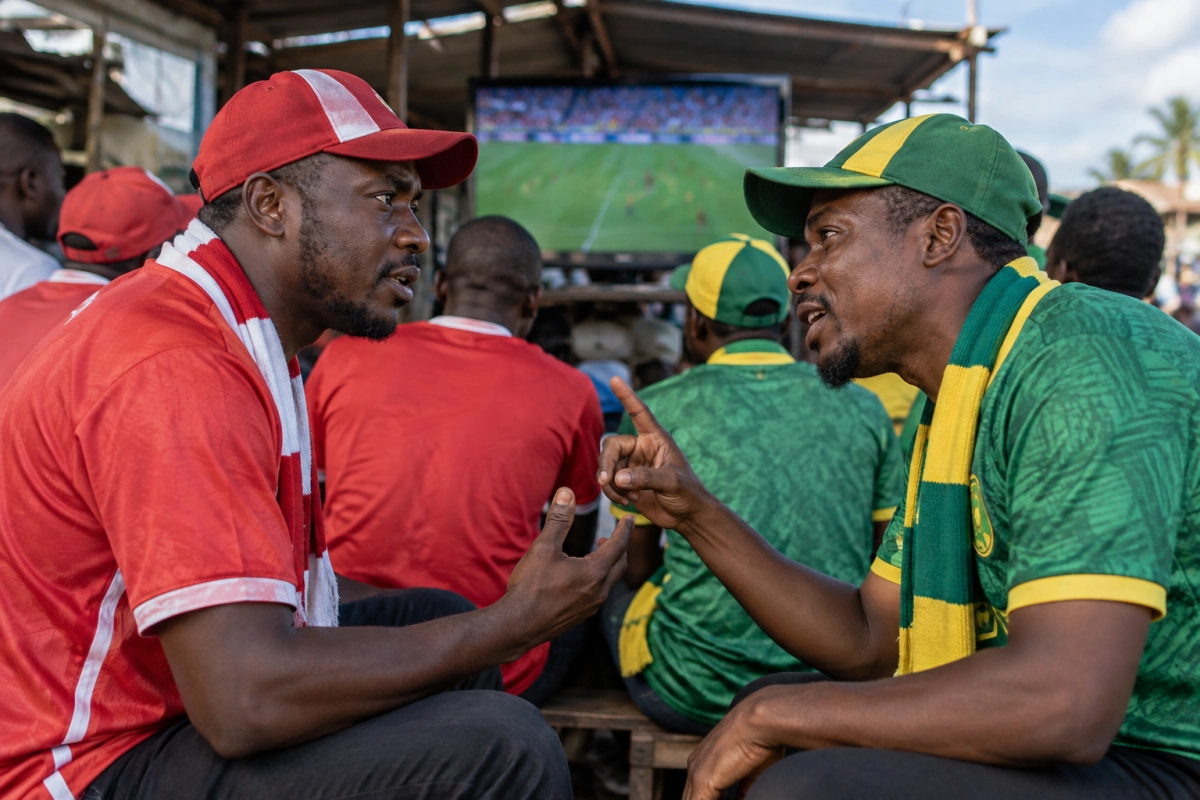
If you have placed money on a Simba SC or Young Africans match in the last few seasons, there is a good chance your stake size changed before you even checked the lineup. This is not a coincidence. It is a pattern that shows up consistently across football betting Tanzania platforms, and it has very little to do with form, injuries, or tactical analysis.
Simba and Yanga are not just football clubs in Tanzania. They are identity markers, and that identity bleeds directly into how fans place bets. You back your team harder, chase losses faster when they disappoint, and treat their matches differently from every other fixture on the slip, even when the underlying football logic does not support it.
The Measurable Gap Between Fan Prediction and Fan Reality
This is not just a Tanzanian habit. Research tracking over 500 football fans and nearly 54,000 individual predictions found that more than 73 percent of app users picked their favorite club to win. Those same clubs actually won only 39 percent of the time. That gap, roughly 34 percentage points between belief and outcome, is the clearest evidence that fandom overrides analysis almost everywhere football is followed closely.
Apply that gap to the Simba-Yanga rivalry and the distortion becomes sharper, not softer. These two clubs dominate roughly three-quarters of domestic betting turnover between them, which means the fan bias problem is not a side issue in Tanzanian football betting. It is sitting at the center of where most local money actually moves.
How Rivalry Fixtures Change Staking Behavior
Watch what happens to average stake sizes in the days before a Kariakoo derby compared to a mid-table league fixture involving smaller clubs like Coastal Union or Kagera Sugar. Stakes climb, multi-bet slips get heavier, and bettors who normally stick to moderate wagers suddenly push larger amounts on markets tied to their club winning outright, rather than safer alternatives like draw-no-bet or both-teams-to-score.
This behavior does not happen in a vacuum. Bookmakers operating in the Tanzanian market are aware of exactly how loyalty-driven betting volume behaves around these fixtures, and odds compilers adjust pricing accordingly, sometimes tightening lines on the favored outcome simply because demand is so lopsided regardless of what the underlying statistics suggest.
What makes this worth examining closely is not that Tanzanian bettors are uniquely irrational. It is that the scale of Simba and Yanga’s fanbase, combined with how concentrated domestic betting turnover is around these two clubs, turns an ordinary psychological bias into something you can actually trace through odds movement and staking volume over a full season. The next section breaks down exactly how that shows up in the numbers bookmakers publish.
Reading the Odds Drift Around Derby Week
Odds compilers rarely announce when they are pricing around sentiment rather than form, but the drift is visible if you track a market from the moment it opens to the moment it closes. In an ordinary midweek fixture, odds move gradually as team news and public money trickle in. Around a Simba-Yanga derby, the movement is front-loaded. A large share of the shortening happens within the first day or two of the market opening, well before squad news, weather, or pitch conditions could reasonably justify it.
That early movement is the fingerprint of loyalty-driven staking rather than informed money. Sharp bettors tend to wait, watching for value as a market settles. Fans do not wait. They back their club the moment the fixture is listed, often at odds that will drift shorter still, meaning the emotional bettor frequently gets the worst version of a price that was never particularly generous to begin with.
Why Draw Markets Get Mispriced in Rivalry Fixtures
One of the more telling distortions shows up not in the win markets but in the draw. Statistically, Simba-Yanga fixtures produce draws at a rate that is not wildly different from other closely matched top-flight encounters. Yet the draw price in a derby is frequently inflated compared to what pure form and head-to-head data would suggest, simply because so little public money goes anywhere near it.
Few fans place money on their own club failing to win, and almost none back a draw as a form of emotional compromise. That absence of balanced interest leaves the draw price exposed, often drifting into territory that represents genuine value for bettors willing to look past the two giants. It is one of the clearest examples of how a crowded, emotionally charged market can leave gaps precisely because everyone is staring at the same two outcomes.
The Loss-Chasing Cycle Unique to Club Loyalty Bets
There is a second layer to this pattern that shows up after the final whistle rather than before it. When a neutral fixture goes against a bettor, the typical response is measured, a smaller follow-up stake or a pause before the next bet. When Simba or Yanga lose, particularly in a derby or a continental fixture, the data on subsequent betting activity tells a different story. Stake sizes on the very next slip tend to rise rather than fall, often on the same club, as if the loss itself becomes justification for staking more rather than less.
This is loss-chasing behavior layered directly on top of identity-driven betting, and it compounds faster than either tendency would on its own. A neutral bettor chasing a loss is working against one bias. A fan chasing a loss on behalf of a club they have supported since childhood is working against two, and the emotional weight of the second one tends to override whatever discipline the first would normally demand.
Tracking this across a full season reveals a recognizable cycle: heavier staking before derbies, inflated draw odds that go largely unbacked, and a short-term spike in stake size immediately following a loss by either club. None of this requires access to private bookmaker data to notice. It is visible in publicly available odds histories and in the betting patterns bettors themselves describe when asked honestly about how they staked a derby weekend compared to an ordinary one.
Betting on Your Club Without Betting Against Yourself
None of this means a genuine Simba or Yanga supporter should stop backing their club, and it certainly does not mean the emotional pull of a derby weekend is a flaw to be engineered out of the experience. The pattern is only a problem when it is invisible, when a bettor mistakes loyalty for analysis and never notices the difference between the two.
The fix is not complicated, even if it runs against instinct. It starts with separating the two decisions that derby week quietly merges into one: the decision to support your club emotionally, and the decision to stake money on a specific outcome. Treating a Simba-Yanga fixture with the same pricing scrutiny applied to any other match, checking where the draw sits relative to recent head-to-head data, resisting the urge to size up immediately after a loss, is less about suppressing passion and more about keeping it from quietly setting the terms of every wager.
What the data ultimately shows is not that Tanzanian bettors behave worse than fans anywhere else. It is that the sheer weight of two dominant clubs, concentrated into a betting market this active, turns an ordinary human bias into something you can watch unfold in real time, in odds histories and staking records anyone can review. For organizations researching behavioral patterns in sports wagering, including groups like BeGambleAware, rivalry fixtures of this kind offer some of the clearest public evidence of how identity and risk-taking intersect. Recognizing that pattern in your own slip is the first step toward making sure your next derby bet is actually a bet, and not just another way of cheering.