
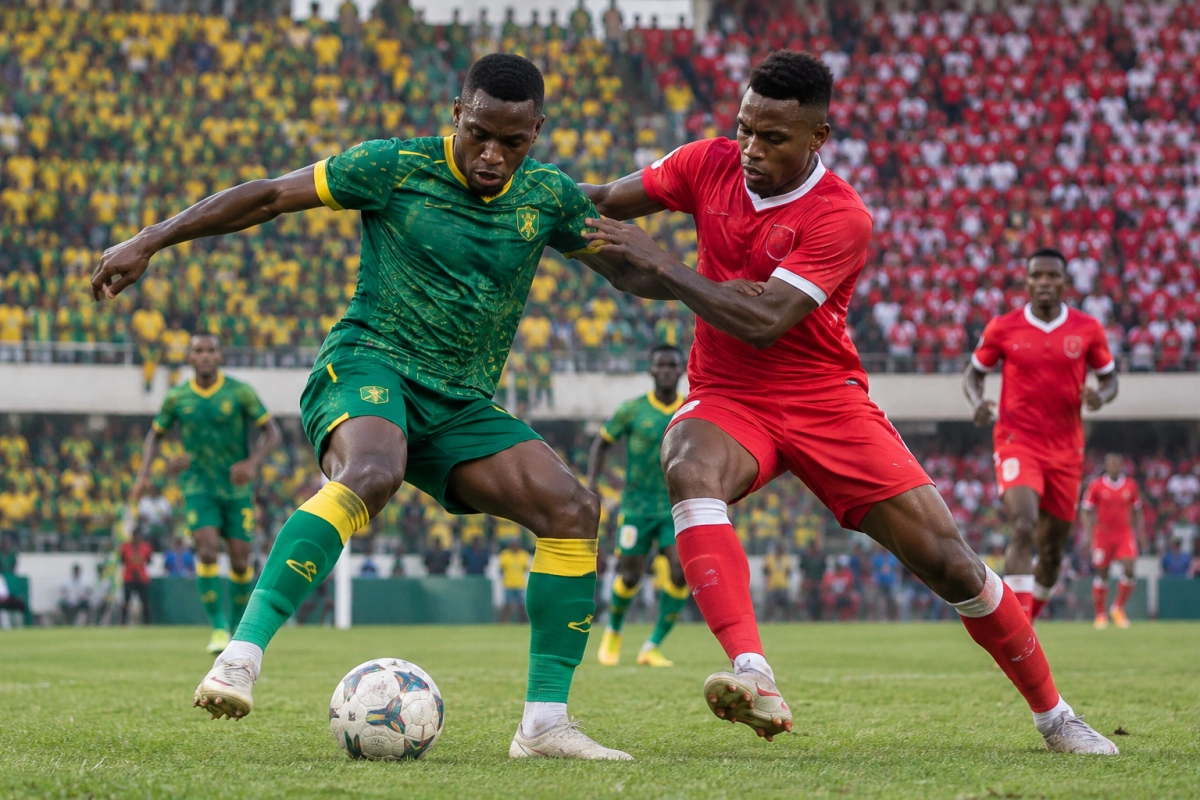
Why Yanga and Simba Prices Rarely Match the Real Risk
It is Saturday, and Yanga is 1.25 against a side from the lower half of the table. The bet feels like free money. That feeling is exactly what the market is built on, and in Tanzania Premier League betting it shapes almost every price you see.
A price of 1.25 implies roughly an 80 percent chance of winning. The question is not whether Yanga or Simba will probably win, because they usually do. The question is whether they win often enough to justify the price you are being offered. Those are very different questions, and most losing slips come from confusing them.
How public money pushes favorites even shorter
The big two attract the largest share of stakes because they feel safe. Mobile money makes it easy to act on that feeling, with a quick M-Pesa deposit and a slip where Yanga and Simba serve as the “banker” legs. When demand for a team is this predictable, bookmakers have little reason to offer generous prices on it.
The result is a market where the favorite is often priced for popularity rather than probability. You are not paying for the win. You are paying for the comfort of backing a name everyone trusts, and that comfort has a cost.
Where Short Odds Hide the Risk
A short price flattens every fixture into the same story. In reality, a Yanga home game against a struggling side and a Yanga trip to a small ground upcountry carry very different risks, yet the odds can sit surprisingly close together.
Away fixtures outside Dar es Salaam
Travel, pitch quality, hostile crowds and opponents who sit deep and play for a draw all work against a big team on the road. The favorite may still win, but narrowly, and a narrow win is where a short-priced bet becomes fragile. One set piece, one red card or one goalkeeper having a great night is enough to turn a safe pick into a lost stake.
When you see a short price away from home, ask what the team actually does in those games. Do they control matches and win comfortably, or do they grind out one-goal results? The answer matters far more than the badge.
Congested schedules and CAF competition weeks
Continental football changes the league picture. A midweek CAF match, a long trip back and a league game three days later rarely produce the same lineup you saw the week before. Coaches rotate, key players rest and the squad on the pitch can look quite different from the one the price assumes.
Odds often do not adjust fully because the team name stays the same, even when the starting eleven does not. That gap between the name and the actual lineup is one of the few places where a careful bettor can still find an edge.
Away form and fatigue are only part of the picture, though. To judge how much risk a price really hides, you also need to see how the big two perform against different types of opponents, from the Dar es Salaam derby to mid-table sides and teams fighting relegation. That comparison is where the draw and double chance markets start to make sense.
Derbies Versus Mid-Table and Relegation-Threatened Sides
The Dar es Salaam derby and a game against a bottom-half team are different problems, and bettors tend to treat them as one. In a derby, motivation is never in question. Both sides know the occasion, the pressure is high and the gap in quality often matters less than the nerves. Matches like this tend to be tighter, cagier and more likely to turn on a single moment.
Games against mid-table sides are usually more open, and relegation-threatened opponents bring a different danger. A team fighting to survive can be disciplined, physical and well organized for ninety minutes, especially at home.
Instead of asking who is better, build a simple comparison from recent seasons. Look at how each of the big two performs against three groups: each other, mid-table sides and the bottom five. Track the result, the margin and where the game was played. If a team wins comfortably against weak opposition at home but scrapes through away, the odds should reflect that split, and often they do not.
Reading Draw and Double Chance Markets
Because the win price is so short, many bettors move to double chance, backing Yanga or Simba to win or draw. It looks like a safer route, but the price usually shrinks until the return no longer justifies the risk. At those odds, a single unexpected loss wipes out the profit from many winning slips.
The draw is the more interesting number. Draws are most likely in the situations already described: derbies, difficult away trips and games after a CAF fixture. Before you touch double chance, check:
- How often the big two have drawn in comparable fixtures, not across the whole season.
- Whether the draw price against a deep-sitting opponent looks generous compared with that history.
- Whether a draw no bet or a handicap would give you a better price than a heavily shortened double chance.
Sometimes the best value is not on the favorite at all. A fair price on the draw in a game the market treats as routine can be a better bet than a thin margin on a team that is already heavily backed.
What to Check When Stats Are Limited
Tanzanian league data is not as deep as what you will find for the major European leagues. Advanced numbers may be missing, so rely on the basics and use them carefully.
Home and away splits
Separate home and away results before judging a team. Season totals blend easy home wins with harder trips and make the record look more reliable than it is.
Rotation around CAF weeks
Mark every league game that falls within a few days of a continental match. Check whether the lineup changed, who started and how the team performed. Over time you will see whether a coach rotates heavily or trusts a settled eleven.
Goal margins
A win is a win in the table, but not in your betting. Two teams can both have strong records, yet one wins by two or three goals while the other keeps edging 1-0. Margins show how comfortable a result really was and how exposed a short price is to a single goal going the other way.
Together, these three checks will not give you perfect data. They will, however, show you where the price and the performance disagree.
Setting Your Own Price Line on a Heavy Favorite
Yanga and Simba will keep winning most of their matches, and bookmakers and the public both know it. Value in this market rarely comes from doubting the big two. It comes from knowing exactly where your belief in them stops and the price starts asking too much.
The most useful exercise is to set that line yourself, before you look at the odds. Here is a simple way to test it:
- Pick one type of fixture, such as a home game against a bottom-five side or an away trip to a smaller ground.
- Collect the last few seasons of results for that type only, and note how many the team won and by what margin.
- Convert the win rate into a fair price by dividing 1 by the win probability. A team that won 17 of 20 comparable games (85 percent) has a fair price of about 1.18.
- Subtract a safety margin for small samples, rotation risk and a lineup you cannot yet confirm. Whatever remains is your threshold.
Then compare your threshold with the market. If the offered price sits below your line, the bet is a pass, however comfortable it feels. If it sits above, you have found a price that pays you for the real risk rather than the reputation. Run the same test on the draw and on double chance, and you will often find that the answer changes with the type of fixture.
Keep a record of every pass and every bet, because your threshold will only be as good as the evidence behind it. Treat it as a working estimate that you refine each round, not a rule you set once. Stakes should stay small enough that a single upset never hurts, and if betting stops feeling like analysis, resources such as Gambling Therapy offer free, confidential support.
The big two will always be popular, and that is exactly why their prices are worth questioning. The bettor who knows their own number before the odds appear is the one who is not led by the crowd.