Your Premier League Bets Are Decided Before You Open the Betting App
Most Tanzanian bettors blame bad luck for a losing Saturday. The real damage often happens earlier, when a slip is built in a hurry, funded in a panic and locked before the lineups are confirmed. The Premier League is scheduled around London, and if you bet from Dar es Salaam, Mwanza or Arusha, that gap in time and infrastructure matters more than most people admit.
This is not about knowing more football than the next person. It is about understanding the conditions you bet under and building a routine that works with them instead of against them.
Converting UK Kickoffs to East Africa Time
East Africa Time is GMT+3 all year, with no clock changes. The UK moves between GMT and British Summer Time, so the gap between London and Tanzania shifts from two hours to three and back again. That means a fixture you have always watched at one hour can quietly move by sixty minutes without any change in the schedule.
The 2026-27 season opens on 21 August 2026, while the UK is still on summer time. A 12:30 Saturday kickoff in London is 14:30 in Tanzania at that point, and it becomes 15:30 once the UK returns to GMT. The same applies to the 3pm and 5:30pm slots, the Sunday games and the Monday 8pm match.
Late games are the real test. When Nottingham Forest host Chelsea on Friday 27 November at 20:00 GMT, that is 23:00 in Tanzania. A kickoff that late changes how you bet, because you are tired, your data bundle may be running low and your last chance to top up may already be gone.
Why Late Kickoffs Change How You Bet
Late evening matches push many bettors into impulsive decisions. You place the slip at 22:40, the match starts at 23:00 and the lineups you wanted to check were announced an hour earlier, while you were busy. Without a fixed routine, the confirmed team sheet becomes something you notice only after the bet is placed.
Fatigue also affects in-play decisions. A late goal at midnight tempts you to chase a loss with a hurried live bet, and those are rarely the bets you would choose at four in the afternoon.
Data, Streams and Deposits Set the Real Limits
Three practical constraints sit between you and a clean bet: your mobile data, your access to a live stream and the time it takes for money to reach your betting account. Each one is small on its own. Together they decide whether you bet with information or with guesswork.
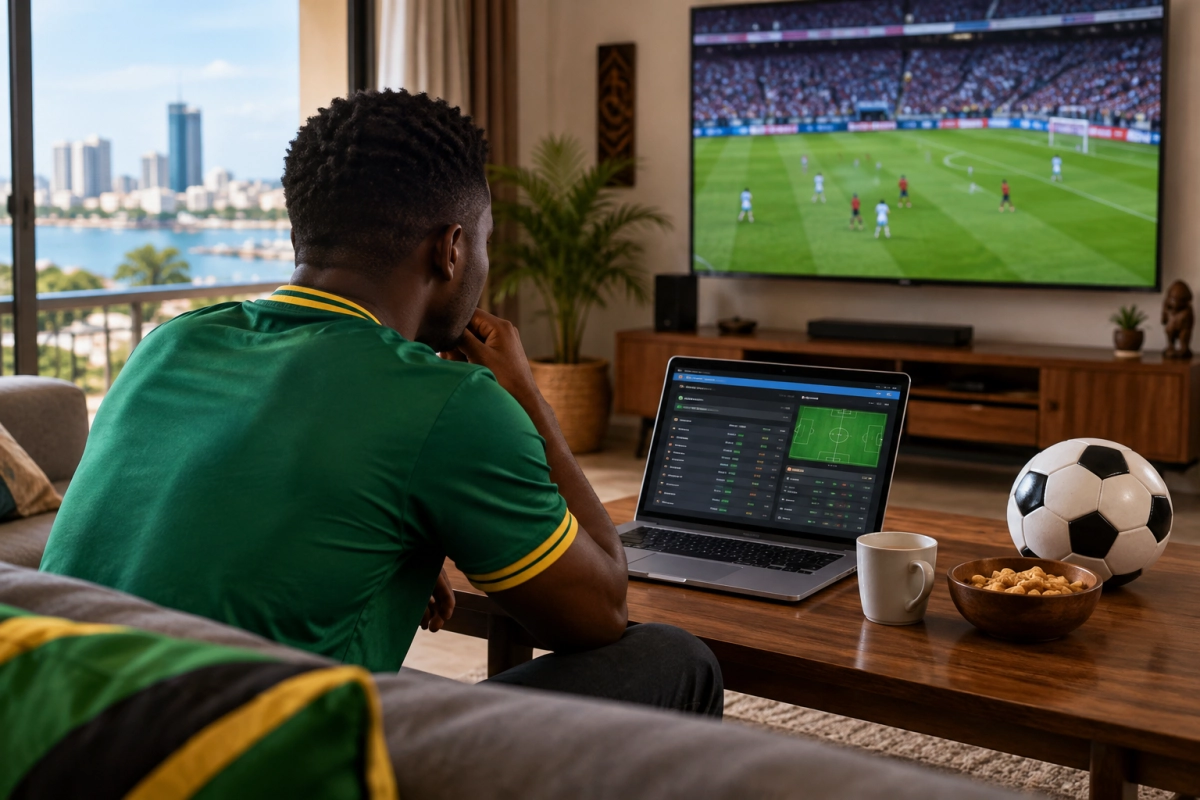
A live stream burns through a bundle quickly, and a weak connection in the second half can leave you staring at a frozen screen while the odds on your app keep moving. If you rely on a stream to bet in-play, you are already acting on a delay, so you need to decide in advance whether the stream is worth the data cost or whether the bookmaker’s own live tracker is enough.
Deposit timing is the third pressure point. A mobile money top-up that arrives late, or a network that stalls at the wrong moment, often forces a rushed decision about stake size. Next, we will look at how to build a timed pre-match routine that covers deposits, lineup checks and slip lock-in before kickoff.
A Pre-Match Routine Built Around East Africa Time
The fix is a fixed sequence, not more willpower. Work backwards from kickoff in Tanzanian time and give each task a slot, so nothing depends on how you feel at the moment.
- Three hours out: Fund your account. Mobile money transfers usually clear quickly, but a delay or a failed transaction is easier to fix when kickoff is not looming.
- Ninety minutes out: Draft your slip, but do not confirm it. Note the price you are willing to accept for each selection.
- About an hour out: Check the confirmed lineups. Clubs publish them roughly sixty minutes before kickoff, which is the moment your draft either survives or changes.
- Fifteen minutes out: Lock the slip, confirm the stake and close the app.
For a 23:00 game, this means the hard work is finished by 22:00, before fatigue starts making choices for you. Set a phone alarm for the lineup check. It sounds trivial, but it is the step most bettors skip.
Spending Data Where It Actually Pays
A limited bundle is a budget, and it deserves the same discipline as your stake. Streaming video is the most expensive thing you can do with your data, and it is rarely the most useful.
Before the match, text-based sources do the heavy lifting. Lineup announcements, injury updates and press conference summaries cost very little to load. Save them for the window before kickoff, when the information is worth the most.
During the match, ask what the stream gives you that a live tracker does not. If you are not betting in-play, the answer is probably nothing, and you can watch on television or skip the match entirely. If you do bet live, remember that any stream runs behind the action, and your bookmaker’s odds can shift before the picture catches up. That gap is a reason to keep in-play stakes small and your selections simple, such as a next-goal market you understand rather than a complicated combination.
Consider a rule: no live bet if you cannot see or follow the match reliably. A frozen stream is not information, and betting on a feed you cannot trust is paying for the privilege of being late.
Adjusting the Slip for Team News, Odds Movement and Fixture Congestion
Once the routine is in place, the slip itself needs flexibility. Treat your first draft as a hypothesis that the evidence can overturn.
Reading team news and price shifts together
A key absence matters most when the market has not fully absorbed it. If your selection’s price has shortened or drifted noticeably since you first looked, ask why. Sometimes the market knows something you do not. Sometimes it has simply overreacted, and the value has moved to the opposite side. Either way, a price that has changed is a reason to pause, not to confirm out of habit. If the odds have fallen below your noted threshold, skip the selection rather than lowering your standards.
Weekend congestion and rotation risk
When a club plays midweek or has a European fixture close by, managers often rotate. Check recent match schedules for each team on your slip, then compare against the lineup you see an hour before kickoff. A heavily changed side can undermine a favourite-heavy accumulator.
The practical lesson is to cut legs, not add them. Three well-checked selections will usually serve you better than six that were built before the team sheets arrived.
One practical habit ties the routine together: confirm kickoff times against the official Premier League fixtures page before you plan your week. Dates and times can be rearranged, and a match that moves by a few hours also moves every deadline in your East Africa Time schedule, from the top-up to the lineup check.
Bet to Your Own Clock, Not the Kickoff Clock
Betting on the Premier League from Tanzania is not a disadvantage if you plan around it. The time gap, the data bundle, the stream and the mobile money transfer are all predictable, and anything predictable can be scheduled. Fund early, draft calmly, check the lineups, lock the slip and step away. Each step protects you from a different kind of rushed decision.
The same discipline applies to the slip. Let team news and price movement overrule your first draft, and keep the number of selections small enough to check properly. A shorter, better-informed slip placed on time beats a long one built in a scramble.
The best bettors are not the ones who watch the most football. They decide when, how and how much to stake before the match starts, and they let the final whistle be the only surprise.