
Why Your Wallet’s Speed Matters More Than You Think
You have probably never thought of your M-Pesa confirmation time as a betting tool, but it is one. The seconds between tapping “deposit” and seeing your balance update on a bookmaker app are doing more to shape your staking behavior than most strategy advice ever will.
Mobile money betting in Tanzania was never designed with betting psychology in mind. It was built for remittances, bill payments, and small business transactions. Yet it has become the backbone of nearly every wager placed in the country, and its mechanics now quietly dictate how aggressively, how often, and how impulsively people bet.
Deposit Speed and the Temptation to Overstake
M-Pesa typically confirms a deposit in under two minutes. Tigo Pesa usually takes a bit longer, and Airtel Money can stretch past five minutes during peak hours, especially on matchday evenings when network congestion spikes. That gap, small as it seems, changes how bettors think.
When a deposit lands almost instantly, there is little friction between impulse and action. You see a tempting Premier League line, you fund your account in under a minute, and you place the bet before the emotional urge even has time to cool off. Fast money in means fast decisions, and fast decisions are rarely your most disciplined ones.
Compare that to a slower confirmation window. Those extra minutes of waiting create a natural pause, a moment where a bettor might reconsider a stake size or even the bet itself. Ironically, the mobile money network many Tanzanians complain about for being “slow” may be doing more to protect bankrolls than any staking plan written on paper.
Withdrawal Delays and the Push Back Into the Market
Withdrawal friction tells a different story. Pulling winnings out, particularly through Airtel Money or during high-traffic periods, can take noticeably longer than depositing. That delay matters because it changes what a bettor does with a win.
If cashing out feels slow or uncertain, many bettors simply leave the winnings sitting in their betting account and reinvest them into the next match instead. This is not always a conscious strategy. It is often a reaction to friction, a preference for the path of least resistance over the discipline of locking in profit.
Small transaction fees, usually in the range of TSh 10 to 22 per transfer, reinforce this pattern. The cost of moving money out and back in again, even if minor, nudges bettors toward keeping funds in play rather than cycling them through their wallet repeatedly.
These patterns rarely show up in how Tanzanian bettors describe their own habits, yet they shape staking size, timing, and discipline in ways worth examining more closely, starting with how deposit speed specifically fuels impulsive in-play wagering during live matches.
In-Play Betting and the Illusion of Control
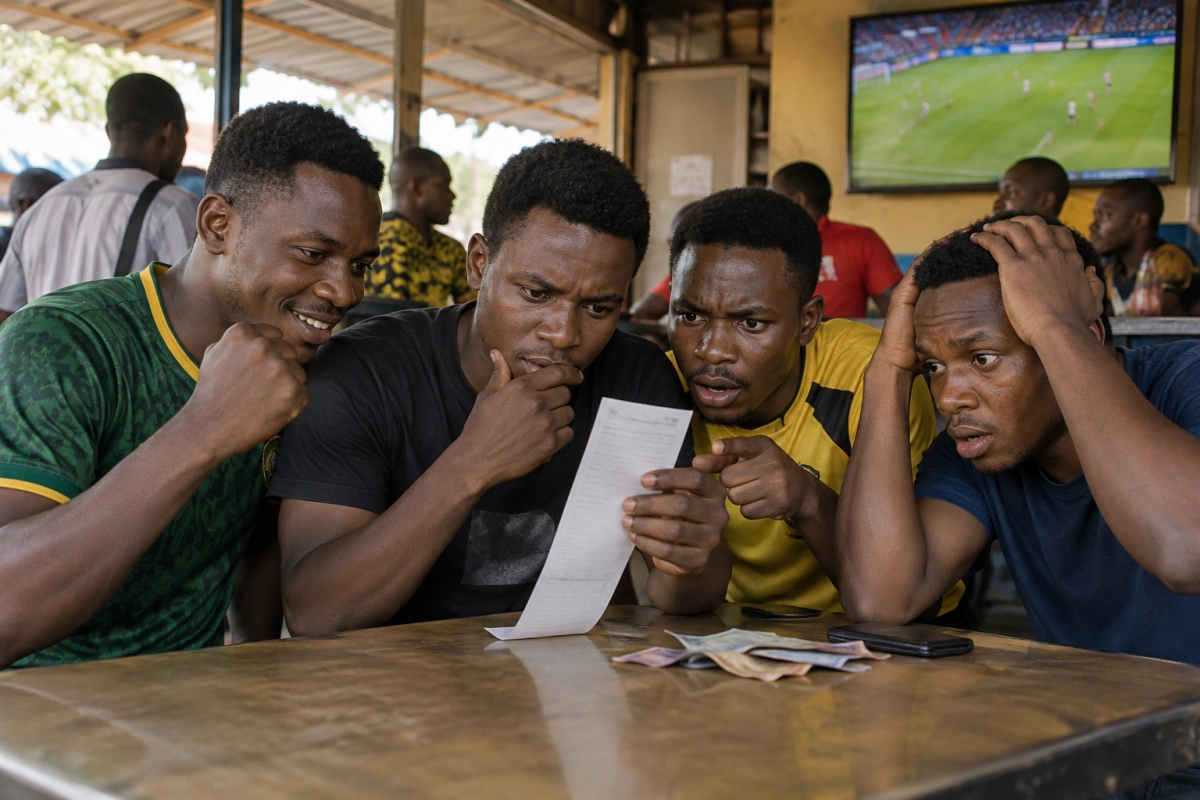
Live betting was always going to thrive in Tanzania, not because bettors suddenly became more sophisticated readers of the game, but because mobile money made the in-play window feel participatory. When a deposit clears in under a minute, a bettor watching a match in the 61st minute does not just observe a corner kick, they act on it. The speed of M-Pesa transforms spectating into a kind of real-time trading floor, and that shift in posture matters more than most platforms acknowledge.
The danger is not the in-play market itself. It is the compressed decision window that fast mobile money creates around it. A bettor who tops up mid-match, confirms within seconds, and places a stake before the next replay has finished has essentially removed the reflection period that slower banking systems used to impose by default. There is no overnight transfer, no bank queue, no “sleep on it” moment. There is only the phone, the balance, and the next live odds update.
This is where staking patterns start to drift from whatever pre-match plan a bettor may have set. A person who opens the app intending to place one considered wager on the match result often ends up topping up two or three more times as the game swings, each top-up smaller than the last but cumulatively larger than the original stake. The transaction speed does not cause this behavior, but it removes nearly every obstacle that might otherwise interrupt it.
Fee Structures and the Shrinking of “Small” Bets
Tanzanian bettors rarely calculate transaction fees as part of their staking math, yet those fees quietly compound over a season of regular betting. A TSh 15 charge on a deposit feels irrelevant in isolation, but multiplied across the dozens of small top-ups that in-play betting tends to encourage, it becomes a meaningful drag on long-term bankroll health.
This fee structure also shapes stake sizing in a subtler way. Because moving small amounts repeatedly incurs repeated costs, many bettors unconsciously round their deposits upward to “make the fee worth it.” Instead of topping up exactly what a planned stake requires, they deposit a slightly larger buffer, which then sits in the betting wallet looking for a reason to be used. That leftover balance becomes the seed of the next impulsive wager, often placed on a market the bettor had no original intention of touching.
Network Reliability as an Unspoken Bankroll Safeguard
There is a counterintuitive upside buried in Tanzania’s uneven network coverage. Rural bettors, or those betting during periods of congestion, frequently experience failed transactions, timeout errors, or delayed confirmations that force a second attempt. Each failed attempt is friction, and friction, as established, tends to favor discipline over impulse.
Bettors who have adapted to this unreliability often describe a kind of forced patience that urban bettors with stronger connectivity rarely experience. They check their balance twice, confirm the stake amount before resending, and in doing so, inadvertently build a habit of deliberation that mirrors what responsible gambling guides spend pages trying to teach.
Designing Discipline Around the Rails You Already Use
None of this means Tanzanian bettors are powerless against the rhythm of their mobile wallets. It means the discipline has to be built around the infrastructure rather than against it. If fast deposits erode the pause between impulse and action, that pause can be manufactured deliberately, a fixed rule to wait through one replay before topping up again, a hard cap on how many in-play deposits are allowed per match, a habit of withdrawing winnings the moment they land rather than letting them linger as “found money” in a betting wallet.
The fee structures that nudge bettors toward rounding up deposits can be turned into an advantage too. Planning a session’s total stake in advance, rather than feeding the account in small reactive bursts, means fewer transaction charges and fewer idle balances tempting a side bet. For bettors curious about how transaction costs stack up across providers, resources like the Bank of Tanzania publish updated mobile money fee schedules worth reviewing before committing to a regular staking routine.
What makes this landscape genuinely interesting is that the technology was never built with betting in mind, yet it has become one of the most honest mirrors of betting behavior the country has seen. Deposit speed, withdrawal friction, and fee structure are not neutral background details. They are active participants in every staking decision, every in-play impulse, and every moment a bettor chooses to walk away or chase one more market. Understanding that is not a minor technical footnote. It is, quietly, one of the most practical forms of bankroll discipline available to anyone betting through a Tanzanian mobile wallet today.