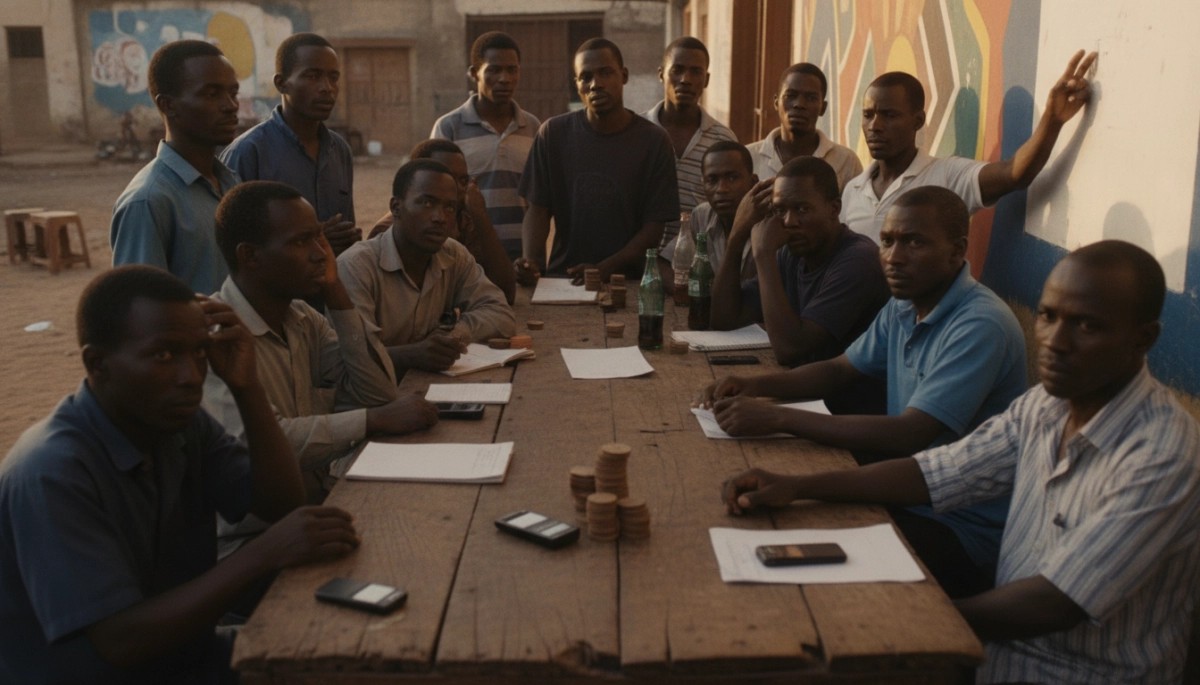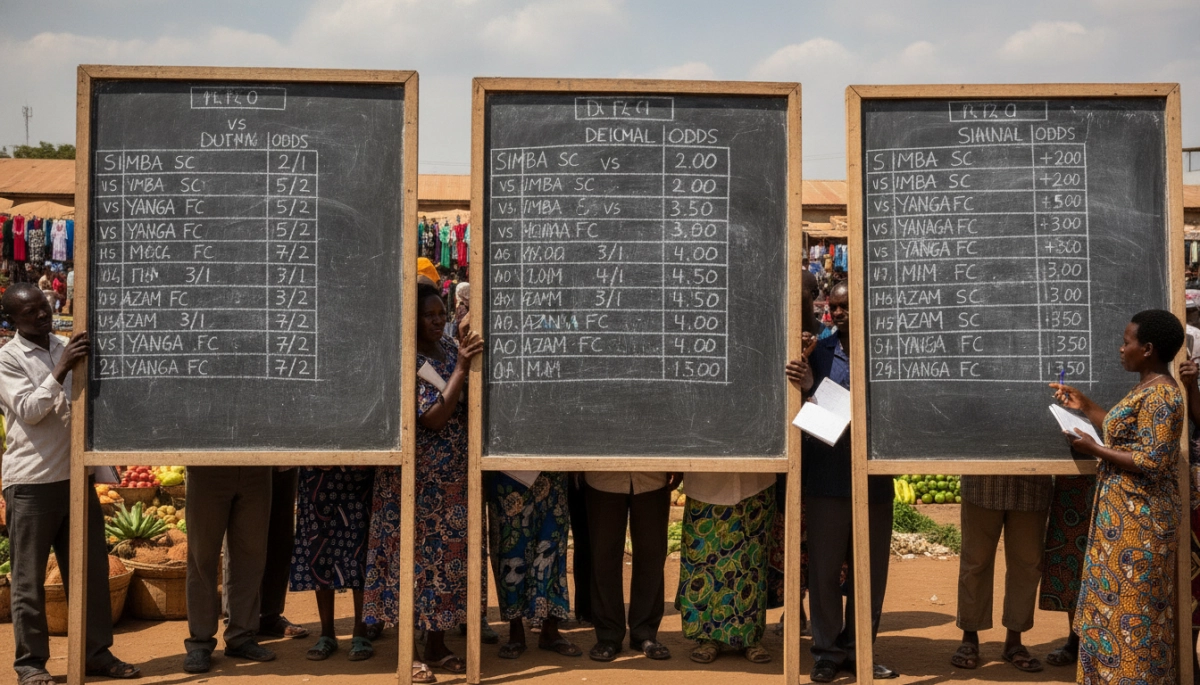

The Infrastructure Behind Your Losses Is Not What You Think
Most Tanzanian bettors who audit their losing streaks focus on the wrong variables. They revisit the odds they took, the teams they backed, the accumulators that collapsed on the final leg. What they rarely examine is the payment infrastructure they used to fund those bets — and how that infrastructure was quietly shaping every decision they made.
Mobile money betting has fundamentally changed how Tanzanian bettors interact with their bankroll. The friction that once existed between a bettor and a wager — walking to an agent, handling physical cash, waiting for a transaction to process — has been almost entirely removed. That friction was not just an inconvenience. For many bettors, it was the only pause between impulse and action.
When an M-Pesa or Airtel Money top-up takes less than thirty seconds and carries no minimum meaningful enough to create hesitation, the behavioral guardrails that once existed simply disappear. The result is a betting pattern that loses money faster than the underlying odds would ever predict on their own.
Instant Access Rewires How Bettors Manage Downswings
A losing run hits differently when your wallet is a phone tap away. The classic response to a bad bet once involved a natural cooling-off period — the time it took to access more funds. That delay created space for reflection. Mobile money removes that space entirely.
What replaces it is a well-documented behavioral pattern called loss chasing. A bettor loses a 5,000 TZS stake, feels the immediate sting, and within two minutes has topped up and placed another bet — often at a higher stake to recover faster. The impulse and the action now occupy the same emotional moment.
This is not a willpower problem unique to Tanzanian bettors. It is a design reality. Mobile money platforms have dramatically shortened the time between a loss and the next deposit, and that compression has measurable consequences for how money leaves bettors’ accounts. The mathematics of chasing losses with accelerated access works only in the bookmaker’s favor.
Low Minimums Create a False Sense of Controlled Risk
The low deposit thresholds available through mobile money carry a psychological effect that is easy to underestimate. When a bettor can top up 500 TZS at a time, each transaction feels insignificant. The problem is that insignificance is cumulative.
Bettors who would never consider placing ten large bets in a session routinely place twenty or thirty small ones, convinced that low per-bet amounts represent disciplined staking. What they are actually doing is making more decisions under emotional conditions, which statistically produces worse outcomes regardless of stake size. Frequency of betting, not just stake size, is a primary driver of total losses.
The frictionless top-up model also makes it harder to track spending in real time. A single 20,000 TZS loss is visible and memorable. Ten separate 2,000 TZS top-ups across an afternoon register differently — less as a financial event and more as a series of small, forgettable moments. The account balance tells the full story, but the psychological experience of getting there does not.
How Frictionless Top-Ups Interact With the Bet Types Tanzanians Favor Most
The mechanics of mobile money deposits do not operate in isolation. They interact directly with the betting markets most popular among Tanzanian bettors — and that combination is more financially damaging than either factor would be alone.
Accumulator betting dominates Tanzania’s sports betting culture. A small stake can theoretically return a life-changing amount if enough selections come through. Bookmakers understand this appeal and actively promote it. What the marketing never emphasizes is the statistical relationship between the number of legs and the probability of total failure.
This is where instant mobile access becomes structurally destructive. An accumulator that collapses on the sixth leg after five correct picks produces a specific kind of frustration — one that feels closer to injustice than bad luck. The emotional logic that follows is that another bet, funded immediately through a thirty-second top-up, represents a reasonable correction. It does not. The next accumulator carries exactly the same probability of failure, placed in exactly the same emotional state that produced the last one.
The Notification Economy and Always-On Access
Mobile money betting exists within a broader mobile ecosystem that compounds its behavioral effects. Betting platforms send push notifications. Promotional offers arrive via SMS. Odds boosts land during live matches, during working hours, and late at night — precisely when emotional regulation is at its lowest.
Because the payment method lives on the same device as the notifications, the distance between receiving an offer and acting on it is functionally zero. A bettor receives a promoted odds alert at 10:45pm, tops up via M-Pesa in under a minute, and places a bet that would never have been considered in a calmer moment. The speed of the transaction ensures no deliberate decision-making process has time to engage.
Research into impulse spending consistently shows that purchase regret rises sharply when transactions happen quickly and without physical handling of money. Mobile money in a betting context — where the notification, the emotion, the payment, and the wager all occur within minutes on a single screen — represents the extreme end of that spectrum.
What Accelerated Losses Look Like Across a Month
A bettor who previously accessed a physical betting shop might realistically place bets on three or four occasions per week, limited by travel, operating hours, and the friction of cash. The same bettor with mobile money access faces none of those constraints. Weekend betting bleeds into weekday betting. Evening sessions extend past midnight. The account is always one notification away.
The consequences play out across several dimensions that compound each other:
- Session frequency increases because there is no logistical barrier to starting a new one
- Loss chasing happens faster and with less deliberation because funds are immediately available
- Spending visibility decreases because multiple small top-ups replace single large deposits
- Emotional decision-making occupies more total betting time because reflective pauses have been designed out of the experience
- Recovery attempts accelerate the cycle rather than interrupting it
None of these dynamics require a bettor to be reckless by nature. They are the predictable outputs of a payment system optimized for speed interacting with a wagering product optimized for repeated engagement.
The Bet You Need to Examine Is the One You Never Made Consciously
The most financially damaging bet a Tanzanian mobile money bettor places is rarely the one that loses on a late goal. It is the one placed without a real decision having been made at all — the top-up that followed a loss in under a minute, the accumulator rebuilt on frustration, the late-night wager triggered by a notification that arrived when judgment was already compromised.
Mobile money has made Tanzanian sports betting genuinely accessible in ways that carry real social value. The same infrastructure that funds a small business or sends money to a rural relative has been woven into a wagering ecosystem designed to extract money at speed. The technology is neutral — the behavioral consequences of how it is deployed are not.
What changes when bettors understand these mechanics is not the odds, which remain fixed against them. What changes is the quality of decision-making before a bet is placed. Recognizing that a 500 TZS top-up feels trivial by design, that loss chasing accelerates because the next deposit is frictionless, and that thirty small transactions across an afternoon constitute a significant financial event — this awareness restores something the current system is specifically engineered to remove: the pause.
Practical discipline here looks less like betting strategy and more like deliberate friction engineering. Setting a single daily deposit limit. Waiting a fixed interval — twenty minutes, an hour — after any loss before accessing funds. Reviewing the week’s total top-up history rather than individual bets. These are not complex interventions. They are attempts to reintroduce the natural pauses that mobile money has eliminated.
The behavioral research on gambling harm consistently identifies speed of access as one of the most reliable predictors of escalating losses across all demographics and wagering formats. Tanzania’s mobile money ecosystem sits at the fast end of that spectrum. Bettors who understand that are not guaranteed to win — the house edge remains what it is — but they are at least competing with accurate information about the full system they are operating inside.
The odds printed on your betting slip are one variable. The payment rail that delivered your stake to those odds is another. Both are working against you. Only one of them is hiding in plain sight.