The Odds Gap That Most Tanzanian Bettors Ignore Completely
Most active bettors in Tanzania have accounts with more than one bookmaker. They might use Betika for one deposit, SportPesa for another, and occasionally check a third platform when a big Premier League weekend comes around. But the majority pick their odds the same way they pick which matatu to board — whichever one is moving first. They do not compare what each platform is actually offering on the same match before placing.
That habit is costing them money in a way that is quiet and consistent. Not through dramatic losses, but through the slow bleed of accepting worse value than what was available on the same bet, at the same time, on a different platform already on their phone.
The gap between bookmakers on a single football market is not random noise. It exists for specific structural reasons, and understanding those reasons is what separates bettors who extract value from markets and bettors who simply participate in them.
Why Tanzanian Bookmakers Price the Same Match Differently
Every bookmaker builds its odds from a probability model and then applies its own margin on top. That margin — the overround or vig — is how the platform guarantees its edge regardless of result. The margin does not have to be consistent across platforms, and in Tanzania’s market, it frequently is not.
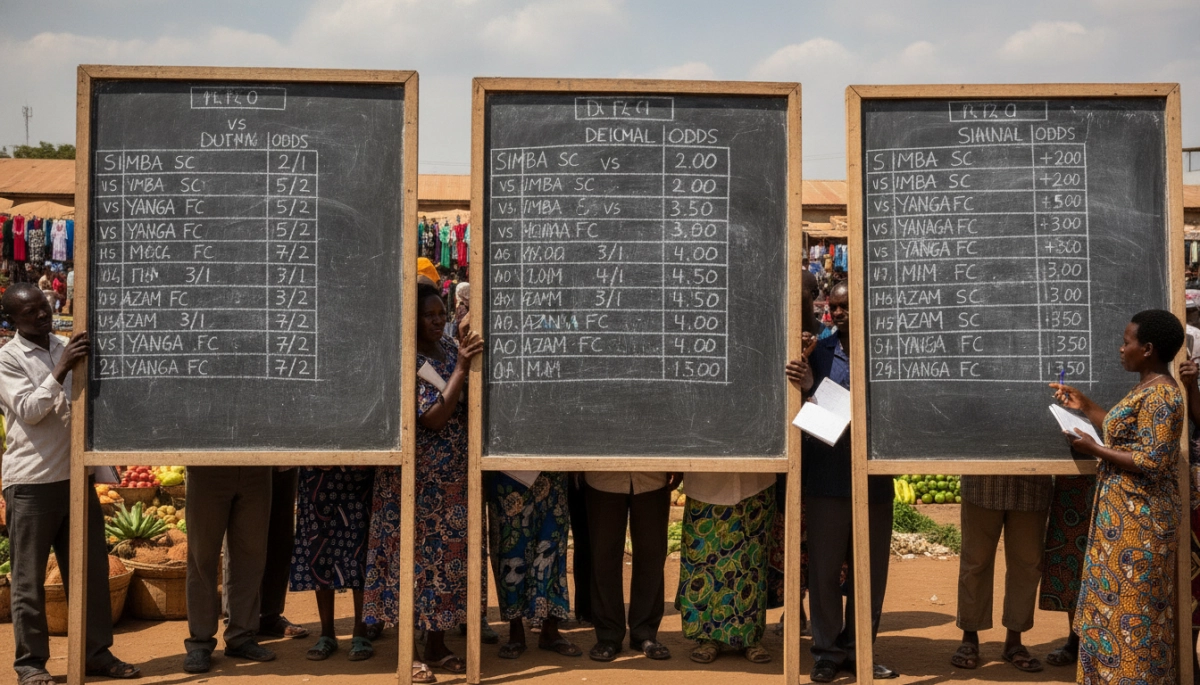
Local bookmakers often apply higher margins on lower-profile matches, particularly African league fixtures and midweek games where liability exposure is harder to manage. On a Tanzania Premier League match between two mid-table clubs, one platform might price the home win at 1.75 while another offers 1.90 on the same outcome. That difference looks small until a bettor runs it across a month of consistent stakes.
There is also the question of where each bookmaker sources its odds feed. Some Tanzanian platforms license pricing from established European trading firms. Others build in-house models with less sophisticated data infrastructure. The result is that two platforms can assess the same Simba SC fixture differently, especially for markets beyond the basic 1X2 — corners, cards, and both-teams-to-score lines in particular.
How Market Timing Creates Temporary Pricing Differences
Odds also diverge because platforms do not update their lines at the same speed. When significant volume hits one bookmaker and forces a line movement — say, the away team drifts from 3.20 to 2.85 due to heavy liability — a competing platform may not adjust immediately. That lag creates a window where the same selection is genuinely better priced on one platform simply because of different reaction speeds.
In European football betting, these windows close within seconds because sharp bettors arbitrage them out almost instantly. In Tanzanian markets, particularly for domestic fixtures with lower global trading interest, those windows can stay open considerably longer. A bettor who knows which platform tends to move its lines earlier — and which one trails — can position on the slower mover before it catches up.
That pattern is the foundation of what experienced bettors call line shopping, and understanding how it applies to the Tanzanian betting environment is where the practical opportunity begins.
What Line Shopping Actually Looks Like in Practice
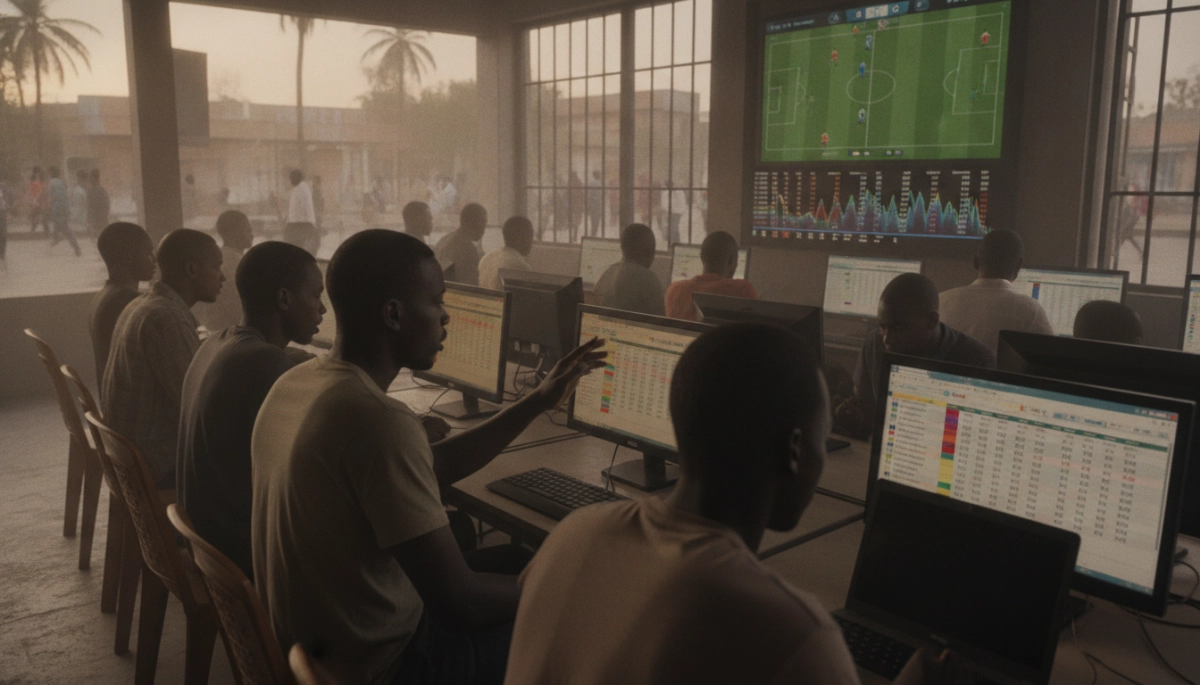
Line shopping is not a complicated system. It requires no software, no subscription, and no specialized knowledge beyond what a regular bettor already has. At its core, it is simply the habit of checking the price for your intended selection across multiple platforms before confirming the bet — and placing where the number is best. The difficulty is not conceptual. It is behavioral, because it requires slowing down a process most bettors have trained themselves to do quickly.
In practical terms, it means having two or three bookmaker apps open at the same time. When a bettor has settled on backing Yanga SC to win a home fixture, the question before placing is not just whether the bet makes sense — it is whether Betika, SportPesa, or another platform is offering the best available price on that outcome. The entire process adds perhaps ninety seconds to the pre-bet routine. Over a month of regular betting, that ninety seconds compounds into a return advantage that no tipster or system can reliably replicate.
The Compounding Effect on Long-Term Returns
Consider what a persistent odds advantage of even 0.10 to 0.15 per bet does over volume. A bettor placing twenty bets per month at consistent stakes, consistently finding fractionally better odds through line shopping, effectively increases their payout on every successful selection. The losing bets cost the same. The winning bets return more. That asymmetry builds silently but reliably behind whatever strategy the bettor is already using.
This is why experienced bettors treat line shopping as basic financial hygiene — comparable to checking prices at two petrol stations when the difference is visible from the same road. The bet is already being made. The stake is already committed. The only variable left to optimize is the price received for being right.
For Tanzanian bettors who focus heavily on markets like:
- African Champions League group stage matches
- Tanzania Premier League weekend fixtures
- English Championship and lower-tier European leagues
- Both-teams-to-score and over/under totals on domestic games
these are precisely the categories where pricing divergence between local bookmakers tends to be widest, because global trading interest is lower and platform-specific modeling gaps are more exposed.
How to Identify Which Platforms Consistently Offer Better Value
Not all odds discrepancies are random. Over time, bettors who track what each bookmaker offers across multiple fixture types begin to notice patterns. Certain platforms consistently price African football more generously because they carry less liability exposure on those markets. Others are sharper on major European leagues but lose their edge on local content. Understanding which platform has structural strengths across which market categories allows a bettor to move beyond reactive comparison into anticipatory shopping.
The practical approach is straightforward. Keep a simple record — even a notes file on your phone — of the odds each platform offered on your last fifteen to twenty bets before you placed. After a month, patterns become visible. You might notice one bookmaker is consistently 0.10 to 0.15 higher on Tanzanian Premier League home wins, while another offers better value on Asian handicap lines for mid-table European clubs. That intelligence, built from your own betting history, becomes a genuine personalized edge.
The bookmakers themselves understand this dynamic. Promotional offers, enhanced odds specials, and price boosts are partly genuine marketing and partly a mechanism to draw bettors back to a platform whose base odds may not be competitive on a given day. A bettor who has mapped the underlying pricing tendencies of each platform can evaluate those promotions with clearer judgment — recognizing when a boosted price is genuinely better than the market and when it is merely catching up to what a competitor already offers as standard.
The Bettor Who Shops Lines Is Playing a Different Game Entirely
There is a straightforward way to think about what line shopping does over time. Two bettors follow the same matches, back the same teams, and stake the same amounts across an entire season. One places wherever habit takes them. The other spends ninety seconds checking prices before every bet. By the end of the season, their win rates are identical because they made identical selections. Their returns are not identical, because one was consistently paid more for being right.
That gap is not luck. It is the mechanical result of receiving better prices on winning bets while paying the same cost on losing ones. In a betting environment where the margin is already working against the bettor, reclaiming even a fraction of that edge through disciplined price comparison is one of the few adjustments entirely within a bettor’s control.
For Tanzanian bettors specifically, the opportunity is more accessible than in more mature markets. Local platforms price African football, domestic fixtures, and secondary European leagues with more variation and less algorithmic precision than they apply to the English Premier League on a Saturday afternoon — so the gaps are wider and stay open longer. The bettor does not need to be fast. They just need to look before they place.
For bettors who want a more structured approach to understanding odds movements across African football, OddsPortal provides a useful reference for tracking how lines move across multiple bookmakers on the same fixture, including markets covering Tanzanian and broader African club competitions.
The odds gap that most Tanzanian bettors ignore is not hidden. It is sitting in plain view on platforms they already have installed, on bets they are already going to place, at stakes they have already decided on. The only thing required to capture it is the discipline to look at the price before accepting it — and the understanding that in betting, the price is never a fixed fact until you make it one by placing without checking.