
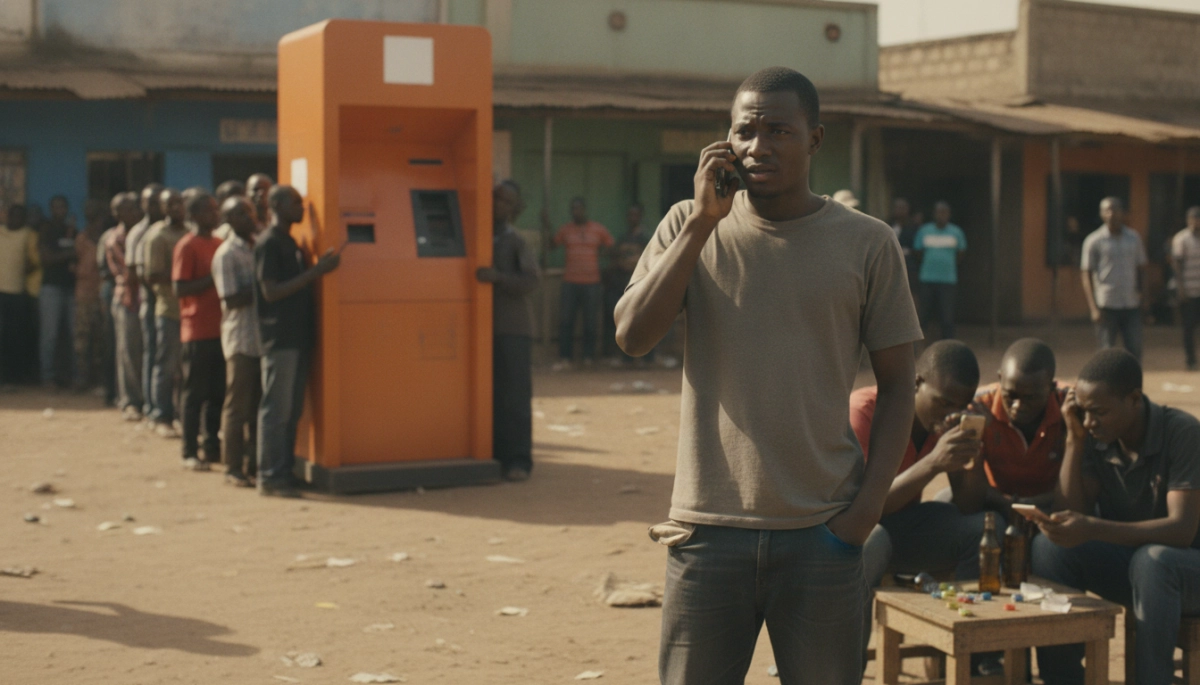
The Payment System That Makes Bankroll Discipline Almost Impossible
Most Tanzanian bettors who track their losses will point to bad picks, wrong odds, or a rough run of results. Very few will point to their phone’s M-Pesa menu. But the infrastructure sitting between a bettor and their money is doing more damage to long-term bankroll management than most people are willing to examine.
Mobile money betting has removed virtually every structural barrier that once slowed the movement of funds. A deposit takes under thirty seconds. There is no card to fetch, no bank queue, no cooling-off period built into the transaction. That frictionlessness is useful when you want to place a considered bet quickly. The problem is that it applies equally to every impulsive decision made after a loss, during a match, or at midnight after a bad accumulator collapses.
The architecture was not designed with bankroll protection in mind. It was designed for speed and accessibility. For a bettor trying to build any deliberate strategy, the same features that make mobile money convenient are the ones that make controlled staking structurally difficult to maintain.
How Instant Deposits Change the Psychology of a Losing Session
There is a specific pattern that experienced Tanzanian bettors will recognize immediately. A bet loses, the balance drops, and within minutes a new deposit is made to chase the session back to neutral. When reloading a betting account requires effort or physical movement, that friction creates a natural pause. The pause is not a guarantee of better decisions, but it creates the conditions for one.
Mobile money eliminates that pause entirely. Loss-chasing does not feel like a deliberate choice. It happens in the same smooth motion as the original deposit, using the same interface, requiring the same few taps. The psychological cost of adding more money is artificially low because the transactional cost is genuinely low.
This is not a character flaw unique to any individual bettor. It is a structural response to a structural prompt. Research into payment behavior consistently shows that reducing friction around spending increases volume and decreases deliberation time. Mobile money betting applies that principle with particular efficiency because the emotional stakes of a recent loss make the prompt even harder to resist.
Payment Cycles and the Weekly Rhythm of Bankroll Erosion
The timing of deposits follows a pattern worth understanding. In Tanzania, mobile money flows tend to cluster around salary dates, weekly income cycles, and end-of-month transfers. Betting volumes rise sharply when money arrives and decline as balances drop. This creates a predictable rhythm where bettors are most active, and often least disciplined, at precisely the moments when their balances are highest.
The combination of a full wallet and instant access to betting markets is, for most people, a high-risk environment for careful staking. The sense of available money creates a permissiveness around bet sizing that fades only after the balance has already taken damage. By the time discipline reasserts itself, the bankroll has often absorbed losses that take the rest of the cycle to recover.
The Withdrawal Feature That Feels Like a Reward Mechanism
Deposits get most of the attention in conversations about mobile money betting behavior, but withdrawals deserve equal scrutiny. The ability to pull winnings back to an M-Pesa wallet instantly has changed how bettors perceive their betting balance in ways that are not immediately obvious.
When a bettor wins and sees that money reflected in their mobile wallet within seconds, the platform has delivered a dopamine loop structurally identical to the reward mechanisms used in the most engaging digital products. The win is real, immediate, and sitting in the same wallet used to pay for groceries.
Many Tanzanian bettors report withdrawing winnings quickly, often out of distrust for the platform, but then redepositing almost as quickly once the excitement fades and the next fixtures appear. The withdrawal feels like discipline, but the frictionless redeposit that follows thirty minutes later negates any protective value. The bettor experiences the psychological satisfaction of a responsible decision without achieving the financial outcome it was meant to produce.
How Bet Sizing Drifts When Friction Is Absent
One of the most underexamined consequences of seamless mobile money integration is what it does to stake consistency during a session. Most bettors set a staking plan when they are calm and thinking clearly. Applying it during a live session, particularly after consecutive losses, is a different cognitive task entirely.
Without friction, the gap between a staking plan and actual execution widens almost invisibly. A bettor who intended to stake 2,000 Tanzanian shillings per bet finds themselves staking 5,000 after a loss, because the ease of the transaction removed any hesitation that might have triggered a second thought. The stake drifted upward not through one dramatic decision but through small adjustments that each felt justifiable in isolation.
This drift is particularly common in the following scenarios:
- After two or three consecutive losses, when a bettor is trying to recover the session in fewer bets
- During live in-play betting, where market movements create urgency that overrides pre-set limits
- At the end of a weekly income cycle, when the bettor is squeezing value from a diminishing balance
- After a large withdrawal, when the betting account looks smaller relative to what was just moved to the wallet
In each case, the absence of structural resistance means the corrective pause never arrives. The bettor’s intention to stick to a plan encounters no external support, only an interface entirely indifferent to whether the stake entered reflects strategy or reaction.
Using the Same Infrastructure to Build Deliberate Structure
The argument here is not that mobile money betting is uniquely predatory. The infrastructure is what it is. The more productive question is whether a bettor can use the same tools that create risk to impose structure on their own behavior.
Several practical approaches work precisely because they engage with the payment architecture rather than ignoring it. One is the deliberate separation of funds, where a bettor maintains a dedicated mobile wallet with a fixed amount allocated to betting for a specific period. When that amount is gone, reloading requires moving money from a separate wallet, introducing exactly the friction the main platform has removed. The extra step is minor, but minor friction applied at the right moment has a measurable effect on impulsive reloading.
Another approach involves treating withdrawal as a non-negotiable habit tied to specific outcomes rather than feelings. A bettor who decides in advance that any balance exceeding a set threshold must be withdrawn before the next session is using the speed of withdrawals as a protective tool. The money leaves the betting environment before the next session’s emotional state can claim it as available capital. This rule must be set when the bettor is calm, documented externally, and treated with the same firmness as a deposit limit.
Deliberate Betting in a System Designed for Speed
The broader lesson is uncomfortable but clarifying: the infrastructure through which Tanzanian bettors interact with their money is not neutral. It has a direction built into it, and that direction favors rapid, high-volume transactions over the measured deliberation that sustainable bankroll management requires. Recognizing this is not a reason for paralysis. It is simply an accurate reading of the environment, and accurate readings are where better decisions begin.
Bettors who maintain meaningful discipline over time share one quality that has nothing to do with picking winners. They have introduced external structure into a process the platform keeps frictionless. They write down session limits before opening the app. They set fixed withdrawal thresholds and treat them as obligations. They allocate betting funds in a separate wallet before the salary cycle peaks. These habits are not complicated. What they require is the prior recognition that the platform will never prompt them, and that the absence of a prompt is itself a kind of pressure.
Understanding how to build personal gambling management habits is increasingly relevant in markets where mobile payment speed outpaces the development of formal consumer protections. In the absence of platform-level safeguards, the behavioral framework a bettor builds for themselves is the only friction that exists. Constructing that framework consciously, before the next deposit prompt arrives, is the single most practical thing a Tanzanian bettor can do to ensure that the convenience of mobile money works for their bankroll rather than quietly against it.