
The Odds Market for African Football Is Built on Thinner Ground
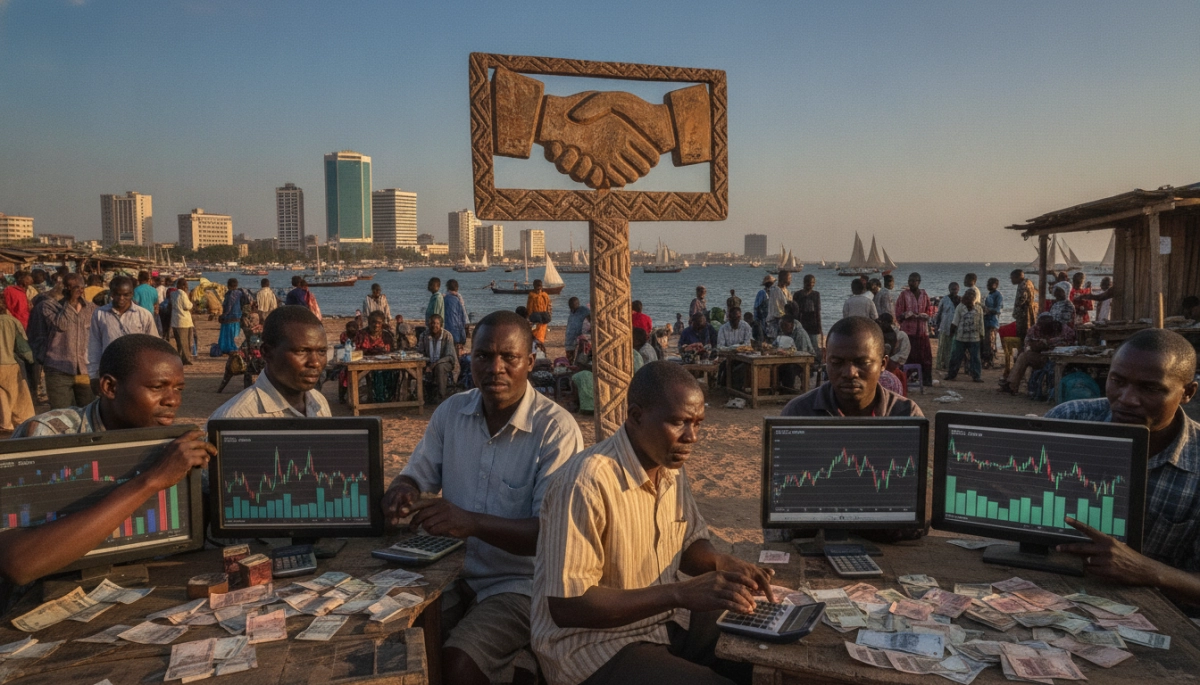
Most Tanzanian bettors who have spent time comparing odds across different competitions have noticed something they cannot quite name. The numbers on Tanzania Premier League matches feel different from Premier League numbers. They move differently, they respond to information differently, and they often do not reflect what is happening on the pitch in any reliable way. That is not a coincidence. It is a structural feature of how bookmakers build and manage odds for African football compared to European leagues.
For European leagues, bookmakers employ dedicated trading teams whose entire job is monitoring specific competitions. They track injury reports, press conferences, training ground information, referee appointments, and head-to-head data at a level of granularity most bettors cannot access. By the time a match in England kicks off, thousands of sharp bettors and automated systems have stress-tested those numbers, pushing them toward what the market believes is the correct probability. The margin for error shrinks substantially before a ball is kicked.
African leagues start from a very different position. The data infrastructure is thinner. Public injury information is inconsistently released. Lineups are sometimes unknown until the match begins. Bookmakers setting odds for these matches are working with less, which means their opening lines carry wider uncertainty bands, even if the published odds do not make that obvious to the casual bettor.
How Sharper Information Flow Shapes European Odds in Real Time
What separates a well-priced European market from an African one is not just the quality of opening odds. It is the speed and intelligence of how those odds update as new information enters the market. A star player ruled out in a Thursday press conference will trigger odds movement within minutes across hundreds of bookmakers simultaneously. That movement itself becomes information, and sharper bettors read it accordingly.
In African competitions, this feedback loop is far weaker. News about a key player’s fitness for a Tanzanian Premier League match might circulate through local WhatsApp groups before it ever reaches a bookmaker’s trading desk in Europe or Asia. The odds may not adjust before kickoff, or they may adjust late and incompletely. For bettors with better local knowledge, that gap represents something real. But most recreational bettors are acting on the same limited information the bookmaker already priced in, or on rumour rather than verified fact.
This raises a harder question: if European markets are already efficient by the time most bettors engage with them, and African markets are inefficient in ways that are difficult to exploit without specific local knowledge, where does value actually exist? That question points directly toward understanding how bookmaker margin behaves differently across these two market types.
How Bookmaker Margin Behaves Differently Across Market Types
Margin is the bookmaker’s built-in profit mechanism. On a competitive European match, the combined overround across a standard three-way market might sit close to 104 or 105 percent with a major bookmaker. That is still a structural disadvantage for the bettor, but a relatively narrow one. Where sharp money flows quickly, bookmakers are pressured to keep margins tight to attract volume.
African league football is priced under different commercial logic. Because betting volume on a Tanzanian Premier League fixture is a fraction of what flows through an equivalent English Championship match, bookmakers face less competitive pressure to sharpen their lines. Margins on African league markets tend to sit higher, sometimes considerably higher, than what the same bookmaker applies to European fixtures. A bettor who has never compared these figures is effectively paying a steeper tax on every wager placed on local football without knowing it.
Higher margin also means the odds are doing less work as a signal. When a European match is priced at 1.85 on a home win, that number has been stress-tested by significant market activity. When a Tanzanian fixture carries the same price, it may reflect a quick assessment by a junior trader using aggregated regional statistics, adjusted primarily to meet a margin target rather than to reflect deep understanding of the specific contest. The price looks identical on screen. The information content behind it is not.
The Local Knowledge Paradox and Why It Is Harder to Monetise Than It Looks
A common assumption among Tanzanian bettors is that familiarity with local football gives them a natural edge over foreign bookmakers. In theory, this logic has merit. A bettor who understands the dynamics of local derbies, knows which coaches rotate heavily before continental fixtures, and tracks unannounced injury problems is working with genuine information asymmetry.
In practice, monetising that asymmetry is harder than it appears. Bookmakers have become aware that local knowledge advantages exist in smaller markets, and they respond by limiting stake sizes on African league matches more aggressively than on European ones. A bettor who consistently wins on Tanzanian fixtures will face reduced maximum stakes faster than someone winning an equivalent amount on Premier League markets.
Beyond that, genuine local knowledge is rarer than bettors believe. Knowing a team’s recent results and having a general sense of form is not the same as consistently sourced information that creates a real edge. Much of what circulates as insider knowledge in local football communities is speculative, delayed, or simply wrong. Acting on bad information in an already high-margin market compounds losses rather than offsetting them.
What Line Movement Reveals About Market Confidence
Reading line movement is a useful skill: not just the final odds, but how prices shift from opening to kickoff and what that movement suggests about where information is entering the market. In European leagues, sharp movement early in the week often reflects professional money reacting to information that has not yet reached the public.
For African league football, line movement requires different interpretation. Significant movement on a Tanzanian match late in the pricing cycle is less likely to reflect professional sharp money and more likely to reflect one of three things: a late team news leak, a surge of recreational betting skewing the market toward a popular side, or the bookmaker manually adjusting to manage liability exposure. Mistaking liability management for informed movement is a specific trap that catches bettors who apply European market-reading habits to African markets without adjustment.
- Early movement in European markets often signals sharp professional activity worth tracking
- Late movement in African markets more frequently reflects liability balancing or recreational volume
- The absence of movement in an African league market is not confirmation that the opening price was correct
- Comparing prices across multiple bookmakers on the same African fixture can reveal where the least confident pricing exists
Understanding these distinctions does not immediately translate into profit, but it changes the quality of decisions being made. Bettors who treat all odds markets as functionally equivalent are missing the specific risks each market type carries beneath the surface of the numbers on screen.
Betting With Structural Clarity Rather Than Market Illusion
The most practical shift a Tanzanian bettor can make is developing an accurate model of what the markets they engage with actually are, structurally, before placing a single wager. European league odds arrive pre-compressed by enormous information flow, professional money, and intense bookmaker competition. Finding genuine value there requires clearing an exceptionally high bar of analysis.
African league markets, including the NBC Premier League, carry a different structural profile. The margins are wider, the pricing is less thoroughly tested, and the information ecosystem is thinner in ways that create both apparent opportunities and hidden traps. The apparent opportunity is that local knowledge can matter. The hidden trap is that the same conditions which make these markets less efficient also make them more opaque and quicker to punish bettors who mistake familiarity with insight.
For bettors who engage seriously with both market types, the most durable advantage is not knowing more than the bookmaker about any single match. It is understanding which market is asking more of them in terms of analytical precision, and calibrating their confidence accordingly. Treating a Tanzanian Premier League fixture as equivalent in pricing quality to a Bundesliga match is not just analytically wrong. It is commercially costly in a way that accumulates invisibly across hundreds of bets.
Those who want to understand the broader mechanics of how odds are structured will find that resources focused on responsible gambling consistently emphasise understanding the house edge before engaging with any market, a principle that applies with particular force when the edge varies as dramatically as it does between elite European football and African league football.
The gap between how these two market types are built is not going to close significantly in the near term. Bookmaker investment in African league trading infrastructure remains limited relative to the commercial weight those leagues carry globally. Recognising that landscape clearly, rather than navigating it on assumption, is where disciplined betting practice actually begins.