
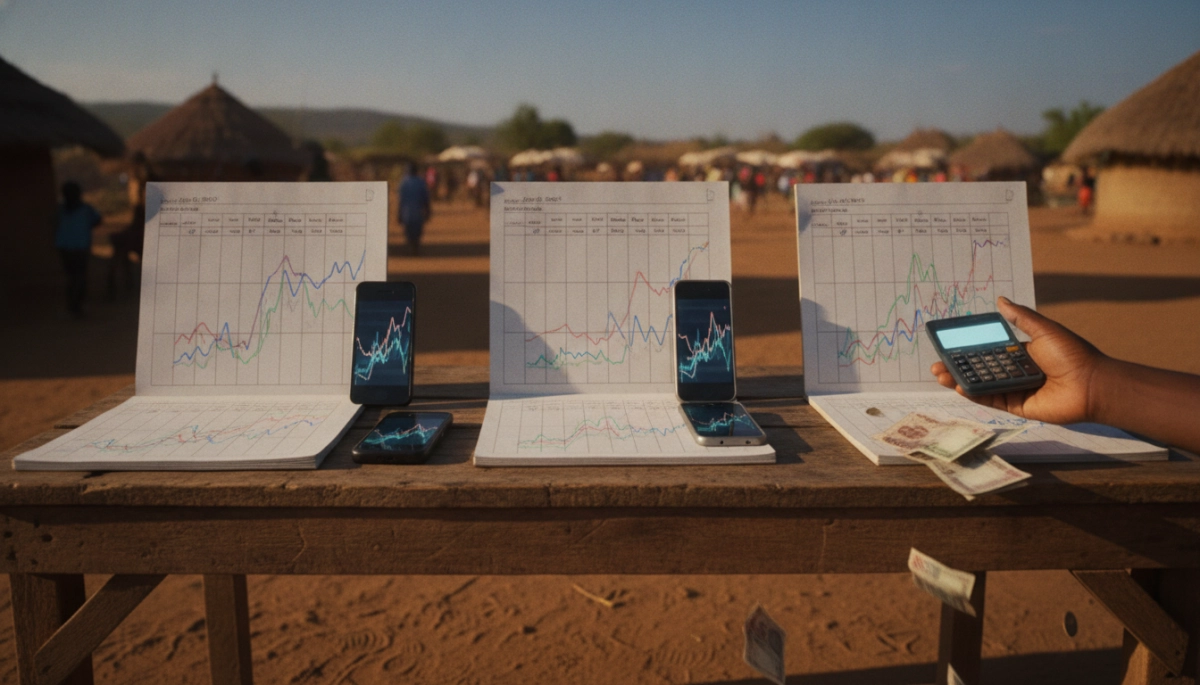
The Same Match, Different Prices: What Tanzanian Bettors Are Leaving on the Table
Most active bettors in Tanzania have accounts on more than one platform. They might use Betika for one match, Sportpesa for another, and occasionally jump to a third when a promotion catches their eye. But very few make deliberate decisions about which platform offers the best price before placing a bet. That habit, or the absence of it, quietly shapes long-term results in ways that are easy to overlook and difficult to recover from.
The assumption is that odds are roughly the same everywhere. On a heavily traded Premier League fixture, this feels reasonable. But even on high-visibility matches, differences of 0.05 to 0.15 in decimal odds on the same outcome are common across Tanzanian platforms. On lower-profile matches from the Tanzania Premier League or second-tier African competitions, those gaps can be considerably wider.
This is not a minor detail. Across hundreds of bets placed over months, consistently taking a lower price than what was available elsewhere compounds into a meaningful loss of potential returns. Football betting is already structured to favor the bookmaker through the margin built into every market. Failing to seek the best available price adds a second disadvantage before a single match has kicked off.
How Bookmaker Margins Work in the Tanzanian Market
Every set of odds a bookmaker publishes contains a built-in margin, often called the overround or vig. It is how platforms generate profit regardless of which outcome wins. If you add the implied probabilities of all outcomes in a market together, they will always exceed 100 percent. The excess is the bookmaker’s cut. In a balanced three-way football market, this margin typically sits between 5 and 12 percent depending on the platform and competition.
Tanzanian bookmakers do not all apply the same margin to the same markets. A platform targeting casual, high-volume bettors may apply a wider margin because it knows its users are unlikely to compare. A platform competing for experienced bettors may price more tightly on popular markets to build credibility. The result is that identical matches can carry meaningfully different margins across platforms operating under the same regulatory framework.
The margin directly determines the minimum strike rate a bettor needs to break even over time. A market with a 10 percent margin demands more correct predictions to stay profitable than one with a 5 percent margin. When a bettor chooses a platform based on familiarity rather than odds quality, they may be unknowingly raising the bar they need to clear just to stop losing money.
Why the Gap Widens on African and Local League Matches
On Premier League fixtures, bookmakers worldwide watch the same sharp money, injury news, and European market movements. Prices stabilize quickly because the information environment is dense. On Tanzania Premier League matches, that environment barely exists. Data is harder to source, team news travels slowly, and the pool of informed bettors is much smaller.
Bookmakers therefore set opening prices with less precision and adjust them more slowly. Odds variation across platforms on local Tanzanian football can be substantially larger than on European football. A bettor who knows where to look can find pricing inefficiencies that simply do not exist on a Manchester City fixture. This is one of the few genuine edges available in African football betting markets, and it requires no prediction skill — only a consistent habit of checking more than one price before committing funds.
Building a Practical Comparison Habit Without Losing the Bet
The practical objection to comparing odds is familiar: by the time you have checked three platforms and confirmed the price, the odds have moved or the opportunity has passed. This concern is real in the final minutes before kickoff, but it tends to become the excuse that prevents a habit from forming at all.
Most Tanzanian bettors are placing pre-match bets, often hours before kickoff or the night before. In that window, a two-minute comparison across platforms is entirely practical. The discipline required is not speed — it is consistency. The bettor who checks two platforms before every bet, even when the difference turns out negligible, will eventually catch the moments when it is not negligible and benefit accordingly.
The most efficient approach is to reduce friction. Keep two or three platforms logged in on the same device, navigate directly to the specific match rather than browsing, and treat comparison as a fixed step before confirmation rather than an optional one. Making it a checklist item rather than a judgment call removes the temptation to skip it when the margin looks small at first glance.
What to Actually Look for When Comparing Prices
Not every odds difference is worth acting on. Several factors determine when a gap merits switching platforms.
Stake size is the most immediate consideration. The larger the stake, the more any odds differential translates into tangible return. A difference of 0.10 on a 50,000 Tanzanian shilling bet produces a very different outcome than the same difference on a 2,000 shilling stake. Bettors placing larger amounts on single selections have the most to gain from making odds comparison a strict rule.
Bet type also matters. On a straight single, the odds differential is straightforward to evaluate. On an accumulator, the effect compounds across every selection. If a bettor builds a four-leg parlay and consistently selects slightly lower odds on each leg by defaulting to one platform, the final payout can be meaningfully lower than what mixing platforms would have produced. The accumulator format already carries higher variance; suboptimal odds at each leg make the problem worse.
Timing shapes the value of comparison too. Prices on major matches converge as kickoff approaches and liquidity deepens. On local Tanzanian league matches, convergence happens more slowly. Comparing prices early in the week on weekend fixtures, when platforms have set opening lines without significant sharp action, often reveals larger gaps than checking an hour before the game.
The Compounding Effect Over a Betting Season
Consider a bettor placing bets across 200 football matches over twelve months. On each bet, they either take the best available price or settle for whatever their default platform offers. The individual differences feel small in isolation. Aggregated, they tell a different story.
If the average odds improvement from systematic comparison is 0.08 in decimal terms, and the bettor is operating at a win rate roughly competitive with the bookmaker margin, that difference across 200 bets represents a cumulative return differential that could easily exceed several months of average staking. This reflects the mathematical reality of how small percentage advantages behave when repeated consistently over time.
What makes this particularly relevant for Tanzanian bettors is that the alternative improvements available to them are genuinely harder to achieve. Getting better at predicting outcomes requires expertise, time, and quality information. Comparing odds requires none of those things. It is a purely structural adjustment that improves expected returns without changing anything about how matches are selected or analysed.
- Bettors who compare platforms on every bet capture more value over time than those who compare only occasionally.
- Accumulator bettors face compounded losses from suboptimal odds at each leg, making comparison especially important on multi-selection bets.
- Local league fixtures offer the widest odds gaps and the most consistent opportunity among Tanzanian bettors.
- Early-week price checking on weekend matches typically reveals larger differentials than last-minute comparisons as kickoff approaches.
Turning Comparison Into Competitive Advantage
The bettors who extract the most value from Tanzanian football markets over the long run are rarely those with the sharpest predictions. They are the ones who have eliminated avoidable inefficiencies from their process before predictions even come into play. Odds comparison is the most accessible of those eliminations, and yet it remains the most consistently neglected.
The foundation is simple: before confirming any bet, check the same selection on at least one other platform. Make it a rule without exceptions, not a habit contingent on how obvious the gap looks at first glance. The moments when the gap turns out to be significant are rarely the ones you would have predicted in advance.
For Tanzanian bettors, the infrastructure already exists. Multiple licensed platforms operate in the market, most with mobile-optimized interfaces that allow quick navigation to specific fixtures. The friction is minimal once accounts are established and the process becomes routine. What has been missing is not access but the deliberate decision to treat price as a variable rather than a given.
Understanding how bookmaker margins are structured also reframes the broader relationship a bettor has with the market. Rather than viewing each bet in isolation, it becomes possible to assess the cumulative cost of platform loyalty when that loyalty is not rewarded with competitive pricing. For anyone serious about improving results without overhauling their approach to match selection, understanding value betting principles provides a rigorous foundation that complements the comparison process described here.
The same bets, on the same matches, with the same staking amounts, but consistently at better prices: that is a meaningful upgrade available to any bettor in Tanzania right now. The margin built into every market already makes long-term profitability demanding enough. There is no sensible reason to make it harder by leaving better prices unclaimed on the table.