
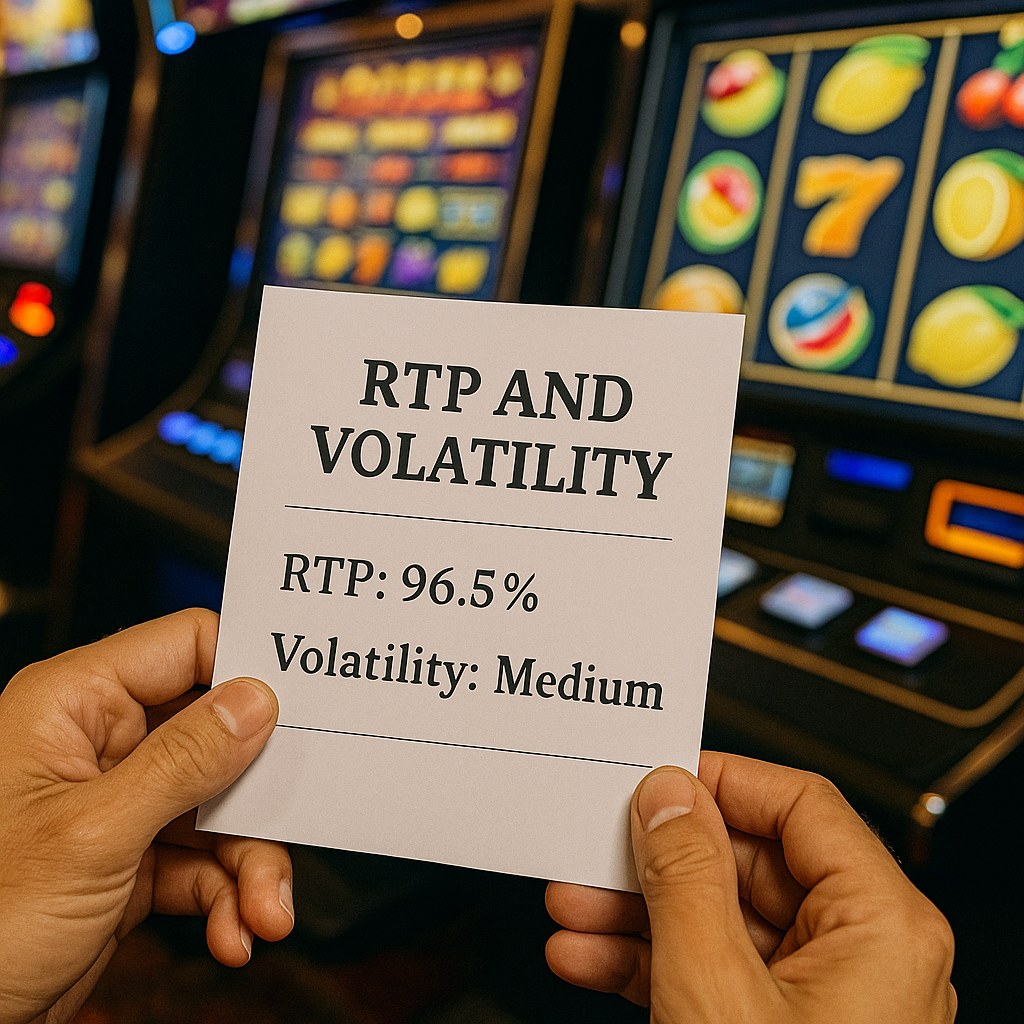
Why RTP and Volatility Matter When Choosing Slots
Many players choose slots based on themes, graphics or the size of potential jackpots. While these elements add entertainment value, they are not the factors that determine how a slot behaves or how often it pays. The two key concepts that truly define the playing experience are RTP and volatility. Players who understand these terms can choose games that match their bankroll, their goals and their risk tolerance. Without this knowledge, slot selection becomes guesswork.
RTP, or Return to Player, indicates the long term average percentage that a slot pays back to players. It is not a promise for any single session but a mathematical expectation across millions of spins. Volatility, on the other hand, determines the distribution of wins. It reflects how frequently a slot pays and how large or small those wins tend to be. Together, RTP and volatility shape the rhythm of gameplay, influencing how long your bankroll lasts and what kind of experience you can expect.
Many beginners mistakenly assume that a high RTP guarantees frequent payouts or that high volatility slots are more generous. In reality, both metrics carry nuances that matter when selecting the right slot. Choosing games wisely means matching your personal play style to the game’s mathematical structure. RTP and volatility provide the blueprint for this decision.
Understanding these elements is not about predicting wins but about making informed choices that support responsible gaming and enjoyable play.
What RTP Really Means in Online Slots
RTP represents the theoretical percentage of total bets that a slot returns to players over a long period. For example, a slot with 96 percent RTP is expected to return 96 units for every 100 wagered when measured across millions of spins. Importantly, this does not apply to short sessions. RTP is a long term statistical measure, not a short term guarantee.
Game providers determine RTP through extensive simulations, ensuring that the value aligns with the design of the slot. The higher the RTP, the more favorable the game is for players in the long run. However, the difference between a 94 percent and 96 percent RTP slot may not be noticeable in a single session because short term results can fluctuate dramatically.
RTP also interacts indirectly with other features. Slots with high RTP generally provide more stable gameplay, while lower RTP games often rely heavily on bonus rounds or special features to deliver excitement. This means that the feel of the game can vary even when RTP values appear similar.
Knowing how RTP works helps players choose games with better long term potential. It also prevents false expectations, such as assuming that a high RTP game will always pay more during a single session.
How RTP Affects Your Expected Returns
RTP influences the mathematical expectation behind every bet. A slot with 97 percent RTP returns more value over time than one with 92 percent. Even small percentage differences can have a significant long term impact. For example, long sessions on low RTP slots can drain a bankroll faster, especially when volatility is also high.
However, RTP does not affect how wins are distributed. Two slots with the same RTP can behave completely differently depending on volatility. This is why RTP must always be viewed alongside volatility to understand a slot’s true characteristics.
Myths About High RTP Slots
Many players believe that high RTP slots pay more frequently or guarantee stable winnings. This is a misconception. High RTP simply means better long term return. It does not control variance, win distribution or bonus frequency.
Another myth is that high RTP increases the chance of hitting special features or jackpots. Jackpots typically operate independently of RTP and are often associated with higher volatility.
Understanding these myths protects players from making choices based on incorrect assumptions.
Understanding Slot Volatility and Why It Changes Gameplay
Volatility, sometimes called variance, measures the risk level and payout pattern of a slot. It describes how often wins occur and how large they tend to be. Slots fall into three broad categories. Low volatility, medium volatility and high volatility. Each provides a different style of play.
Low volatility slots deliver small but frequent wins. They offer smoother sessions and longer playtime with a modest bankroll. High volatility slots, by contrast, deliver fewer but larger wins. These games produce thrilling moments but also longer dry spells. Medium volatility sits between the two and offers balanced gameplay.
Volatility affects not only your bankroll but also your emotional experience. Players who enjoy consistent action may prefer low volatility games. Those seeking big payout potential may gravitate toward high volatility slots, even though they require patience and a larger bankroll.
Understanding volatility allows players to choose games that match their expectations and risk tolerance. It prevents frustration because players know what type of performance a game is designed to deliver.
Low Volatility Slots
Low volatility slots provide frequent small wins. These games are ideal for casual players, beginners or anyone who wants long sessions with minimal risk. They are often used for wagering requirements because their consistent payouts help preserve bankroll.
Low volatility slots typically rely on base game wins rather than massive bonus rounds. They offer entertainment through stability rather than sudden spikes in payout size.
High Volatility Slots
High volatility slots are designed for players comfortable with risk. These games produce large but infrequent wins. Long stretches without payouts are common, but the potential reward is significantly higher when a win does occur.
These slots often include powerful bonus features, multipliers or jackpots that contribute to their high variance. They are best suited for players with larger bankrolls who enjoy high tension gameplay.
RTP vs Volatility, How They Work Together
RTP and volatility are often discussed as if they were interchangeable, but they serve entirely different purposes. RTP describes how much a slot returns in the long run. Volatility determines how those returns are distributed during play. Understanding how the two metrics interact is essential for choosing slots that match your playing style.
Two slots may share the same RTP of 96 percent but behave completely differently because of volatility. A low volatility version will deliver many small wins that keep your bankroll relatively stable. A high volatility version with the same RTP will offer fewer but potentially massive payouts. This means RTP alone cannot predict how your session will feel or how quickly your funds may rise or fall.
When selecting a slot, think of RTP as the long distance roadmap and volatility as the terrain. One slot may offer smooth, steady progress while another features steep climbs and sudden drops. Neither is inherently better, but one might suit your goals better depending on how long you want to play and how much risk you are willing to accept.
Players who prefer long, relaxed sessions should prioritize lower volatility even if the RTP is slightly lower. Those who chase big wins should favor higher volatility, ideally combined with competitive RTP. Combining both metrics leads to smarter decisions and more enjoyable play.
How to Choose the Right Slot Based on Your Play Style
Choosing the right slot requires self awareness and a clear understanding of your goals. Not every slot fits every player. Your decision should be based on your budget, the type of experience you want and your tolerance for risk.
If you prefer steady gameplay and longer sessions, look for slots with lower volatility. These games help you maintain your bankroll and offer frequent payouts that keep the action moving. They are excellent choices for beginners or for players who enjoy casual entertainment.
If you enjoy high risk high reward gameplay, consider high volatility slots. These games provide more intense excitement and the possibility of large payouts, especially during bonus rounds. However, you should expect long periods without major wins and prepare with a larger bankroll.
Players with balanced preferences may choose medium volatility slots. These offer a mixture of both frequent small wins and occasional larger payouts.
RTP should also influence your choice. When two slots have similar volatility, pick the one with the higher RTP. A difference of even one or two percent can matter significantly during long term play.
Choosing a slot with the right combination of RTP and volatility enhances enjoyment and improves bankroll sustainability.
Example Scenarios to Help You Pick Better Slots
To better understand how RTP and volatility influence your play, consider the following scenarios. Each represents a common player profile and shows how different slot types can match different expectations.
Scenario 1: The Casual Player
A player with a small bankroll who wants long gameplay sessions should choose a low volatility slot with an RTP of at least 95 percent. These slots provide steady entertainment without large risk. The frequent small wins help maintain balance and avoid sudden losses.
Scenario 2: The Bonus Hunter
Some players enjoy chasing free spins and special features. Medium volatility slots are ideal for this purpose. They balance feature frequency with decent win potential. A slot with strong bonus mechanics and a respectable RTP offers an engaging and reasonably stable experience.
Scenario 3: The High Roller
High volatility slots are perfect for players who chase large payouts and have the bankroll to support long dry spells. These slots can produce massive wins, especially during bonus rounds or jackpot triggers. Look for games with RTP above 96 percent to maximize long term value.
Scenario 4: The Wagering Requirement Player
Players who want to complete bonus wagering requirements should stick to low volatility slots. Their steady win pattern helps preserve bankroll and avoids large swings that can jeopardize completion of the requirement.
Comparison Table of Slot Types
Below is a simple comparison table that highlights which type of slot is suitable for which kind of player.
| Volatility Level | Win Pattern | Ideal For | Bankroll Needs | RTP Preference |
|---|---|---|---|---|
| Low Volatility | Frequent small wins | Casual players, beginners, wagering requirements | Small to medium | Moderate or high |
| Medium Volatility | Balanced wins | Bonus hunters, flexible players | Medium | High preferred |
| High Volatility | Rare but large wins | High rollers, thrill seekers | Large | Highest available |
This table helps players quickly match their goals to the most suitable slot type. By combining this with RTP awareness, players can make confident and informed decisions.
Responsible Slot Play and Bankroll Management
Choosing the right slot is only part of the equation. Successful and enjoyable slot play requires responsible bankroll management. Players should establish clear limits before starting and avoid chasing losses. It is important to remember that RTP and volatility do not guarantee outcomes. They simply describe how the game is structured.
Players should also set time limits for each session. Slots are designed for entertainment and should never be treated as a source of income. Understanding that wins and losses are both possible helps maintain emotional balance.
Conclusion: Using RTP and Volatility to Make Smarter Slot Choices
RTP and volatility are the foundation of smart slot selection. While themes, graphics and bonus animations may attract attention, the true behavior of a slot is defined by its mathematical structure. RTP determines the long term expected return, while volatility dictates how wins are distributed throughout gameplay. When players understand these concepts, they gain more control over their experience. They know what to expect, how to manage their bankroll and which games align with their goals.
Choosing the right slot is not about chasing guaranteed wins. It is about finding a game whose risk level and payout rhythm match your comfort zone. Players seeking steady entertainment should gravitate toward low volatility slots with decent RTP. Those chasing occasional big wins can embrace high volatility games, provided they have the patience and bankroll to withstand fluctuations. Medium volatility slots offer a balanced middle ground for players who enjoy both stability and excitement.
RTP and volatility work together to shape session length, emotional engagement and overall satisfaction. By understanding these elements, players avoid unrealistic expectations and make informed decisions that support responsible gambling. With the right mindset and tools, slot play becomes a managed entertainment experience rather than a guesswork driven activity.
RTP and Volatility FAQ
1. Is a higher RTP always better when choosing a slot
Higher RTP is generally more favorable in the long run, but volatility still determines how the game behaves in the short term.
2. Do high RTP slots pay more often
Not necessarily. Frequency of wins is controlled by volatility, not by RTP.
3. What slot volatility is best for beginners
Low volatility slots offer frequent small wins and longer playing time, making them ideal for new players.
4. Can RTP be changed by the casino
Licensed casinos cannot alter RTP on regulated games. However, some slots offer multiple RTP versions, and operators choose which one to publish.
5. Is high volatility the same as high risk
Yes. High volatility slots produce fewer wins but can deliver significantly larger payouts.
6. How can I find a slot’s RTP and volatility
Check the game information panel or paytable section. Most reputable providers disclose both metrics clearly.