
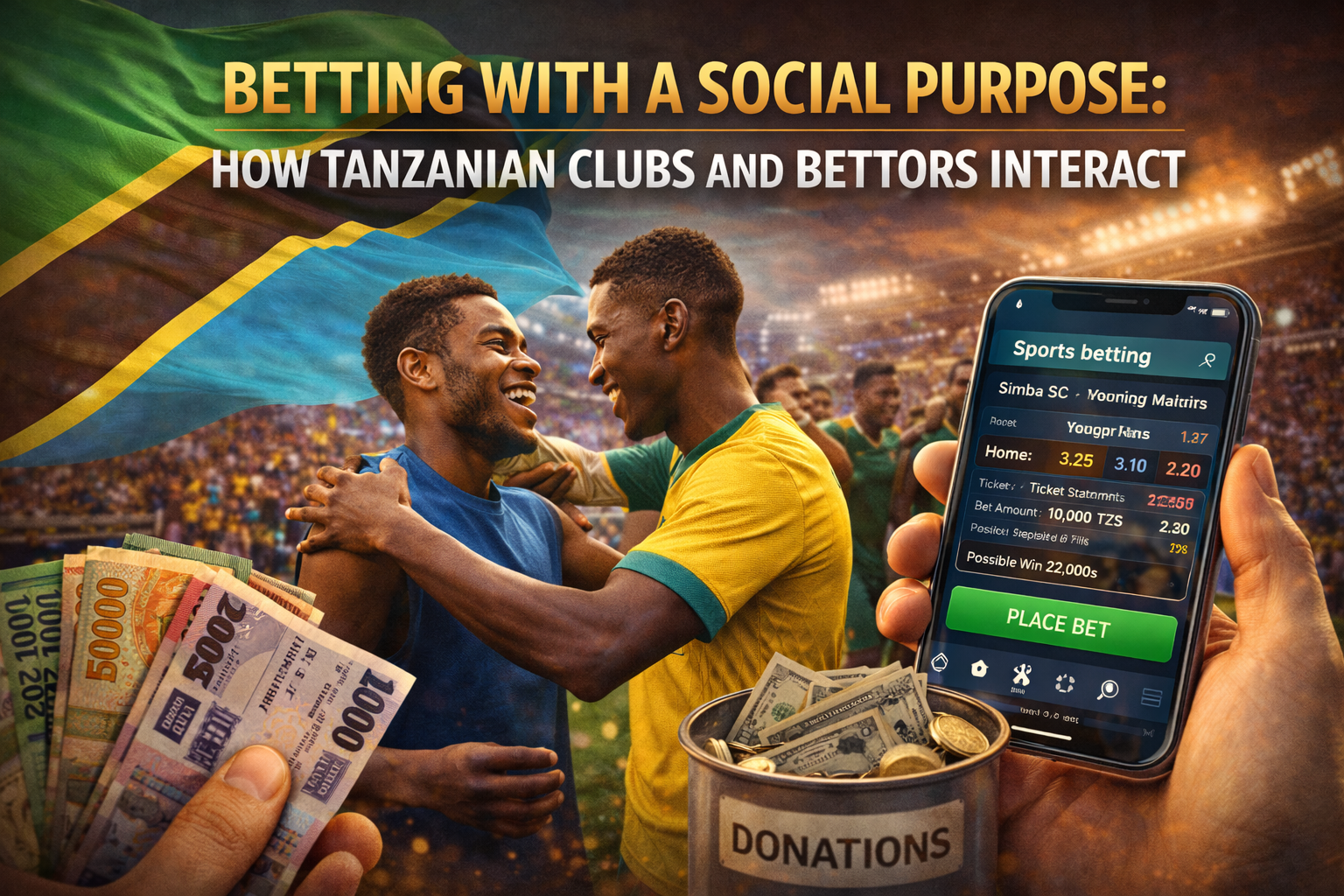
Betting with a social purpose has become an increasingly visible concept in East Africa, and Tanzania is one of the most interesting examples of how sports betting, football clubs and local communities intersect. Unlike markets where betting exists almost entirely as a commercial product, the Tanzanian ecosystem shows a more complex relationship. Betting companies sponsor clubs, clubs support community initiatives, and bettors often see themselves not just as players, but as contributors to local football culture.
This article explores how Tanzanian football clubs and bettors interact, how betting money flows back into the sport, where the benefits truly lie, and what risks and ethical questions still remain.
The rise of sports betting in Tanzania
A fast growing betting market
Over the past decade, sports betting has grown rapidly in Tanzania. Mobile technology, widespread smartphone use and mobile money platforms have made betting accessible to a broad segment of the population. Football dominates the betting landscape, with local leagues, European competitions and international tournaments attracting daily wagering activity.
For many Tanzanians, betting is not only entertainment but also a way to engage more deeply with football. Small stakes are common, and group betting discussions are part of daily social life in cities and towns.
Regulation and structure
Sports betting in Tanzania is regulated by national authorities, and licensed operators are required to meet tax and compliance standards. This regulatory framework has allowed betting to integrate more openly into the sports economy, particularly through sponsorships and partnerships with football clubs.
While regulation does not eliminate all risks, it has created a clearer structure for how betting companies operate and contribute financially.
Football clubs as community institutions
Clubs beyond the pitch
Tanzanian football clubs are more than competitive teams. They are cultural symbols, social hubs and sources of local pride. Clubs like Young Africans SC and Simba SC are followed passionately across the country and have fan bases that stretch far beyond stadium walls.
Because of this role, any financial partnership involving clubs has broader social implications. When betting companies sponsor clubs, their influence extends into the community.
Financial realities of Tanzanian clubs
Many Tanzanian clubs face financial challenges, including limited ticket revenue, inconsistent sponsorship and infrastructure constraints. Betting sponsorships have become an important source of stable income.
These funds are often used for:
- player salaries and staff wages
- youth academy development
- travel and logistics
- basic infrastructure improvements
Without these partnerships, some clubs would struggle to remain competitive or even operational.
Betting sponsorships and social responsibility
How betting companies position themselves
Betting companies operating in Tanzania often present themselves as partners in football development rather than purely profit driven businesses. Sponsorship deals usually include visible branding, but also commitments to community programs.
Common initiatives include:
- funding youth football tournaments
- supporting grassroots academies
- refurbishing training grounds
- sponsoring local football events
This approach helps betting brands gain legitimacy and acceptance among fans and communities.
The concept of betting with a social purpose
The idea behind betting with a social purpose is simple in theory. Money generated from betting activity contributes to the sustainability of clubs and, indirectly, to community development. Bettors often justify participation by believing they are supporting their favorite teams.
This creates a feedback loop:
- bettors wager on football
- betting companies earn revenue
- clubs receive sponsorship funds
- clubs invest in teams and communities
- fan engagement increases
In this sense, betting becomes part of a broader sports ecosystem rather than an isolated activity.
The role of bettors in the system
Bettors as supporters, not just gamblers
In Tanzania, many bettors strongly identify as football supporters first and gamblers second. Betting is often framed as an extension of fandom. Wagers are placed on local teams, derbies and regional competitions with emotional investment.
This mindset changes how betting is perceived. Rather than purely chasing profit, bettors often see small losses as part of supporting the game they love.
Social betting culture
Betting shops and informal betting discussions act as social spaces. People gather to watch matches, analyze odds and debate outcomes. These interactions strengthen community ties and reinforce football culture.
However, this social normalization also carries risks, particularly for younger bettors who may underestimate the financial dangers.
Positive impacts on Tanzanian football
Improved financial stability
One of the most tangible benefits of betting involvement is increased financial stability for clubs. Regular sponsorship income allows better planning and reduces dependence on unpredictable funding sources.
This stability can lead to:
- improved squad quality
- more consistent league competition
- better youth development pathways
Youth development and grassroots football
Some clubs use betting sponsorship money to support youth academies and school programs. These initiatives provide structure, coaching and opportunities for young players who might otherwise lack access to organized sport.
Over time, this contributes to the overall quality of Tanzanian football and creates pathways for talent development.
Increased visibility and professionalism
Betting sponsorships often come with marketing support, media exposure and professional branding. This raises the profile of clubs and the league as a whole.
Greater visibility attracts additional sponsors and encourages higher organizational standards across the sport.
Ethical concerns and real risks
Problem gambling and vulnerability
Despite the positive aspects, betting with a social purpose has clear ethical limits. Problem gambling remains a serious concern. Economic conditions mean that even small losses can have significant consequences for individuals and families.
The social framing of betting can sometimes obscure these risks, making gambling seem harmless or even socially beneficial when it is not.
Influence on sporting integrity
Another concern is the potential impact on match integrity. While there is no widespread evidence of manipulation in Tanzanian football, the close relationship between betting markets and local matches requires careful monitoring.
Transparency, regulation and education are essential to protect the credibility of the sport.
Responsibility of clubs and operators
Clubs and betting companies share responsibility for promoting responsible gambling. This includes:
- clear messaging about risks
- limits on advertising toward minors
- support for problem gambling awareness
Organizations such as FIFA emphasize the importance of safeguarding football integrity and social responsibility within all commercial partnerships.
Striking a sustainable balance
Education and awareness
The long term success of betting with a social purpose depends on education. Bettors must understand odds, risk and bankroll management. Clubs should encourage responsible behavior rather than blind participation.
When betting is approached as entertainment rather than income, its negative impact can be reduced.
Clear boundaries and transparency
Clubs should be transparent about how sponsorship funds are used. When fans see tangible benefits such as improved facilities or youth programs, trust increases and skepticism decreases.
Clear boundaries between sporting decisions and betting interests are also essential to maintain integrity.
The future of betting and football in Tanzania
Evolving partnerships
As regulation improves and the market matures, partnerships between clubs and betting companies are likely to become more structured and socially focused. There is potential for more targeted investment in community projects tied directly to football development.
A model for other markets
Tanzania’s experience offers lessons for other emerging betting markets. Betting does not have to exist purely as a profit driven activity. When carefully managed, it can support sports ecosystems while still requiring strong safeguards.
The challenge is ensuring that social purpose remains genuine and not just a marketing slogan.
Conclusion: betting as a tool, not a solution
Betting with a social purpose in Tanzania shows how betting, football clubs and communities can interact in complex and sometimes positive ways. Sponsorships have brought financial stability, supported youth development and strengthened football culture. Bettors often see themselves as part of this system rather than outsiders.
However, betting is not a solution to deeper economic or sporting challenges. Without regulation, education and ethical responsibility, its risks can outweigh its benefits.
When betting remains controlled, transparent and secondary to the sport itself, it can play a constructive role. When it becomes dominant or unchecked, it threatens the very communities it claims to support.
FAQ
How do betting companies support Tanzanian football clubs
They provide sponsorship funding used for salaries, logistics, youth academies and infrastructure.
Do bettors really contribute to club development
Indirectly, yes. Betting revenue helps fund sponsorships that support clubs, but bettors should not view losses as charitable contributions.
Is betting dangerous for local communities
It can be if not regulated and approached responsibly. Education and limits are essential.
Are Tanzanian football clubs dependent on betting sponsors
Some clubs rely heavily on this income, which creates both stability and risk.
Can betting with a social purpose work long term
Only if strong regulation, transparency and responsible gambling practices are maintained.