
The Big Two Problem in Tanzania Premier League Betting
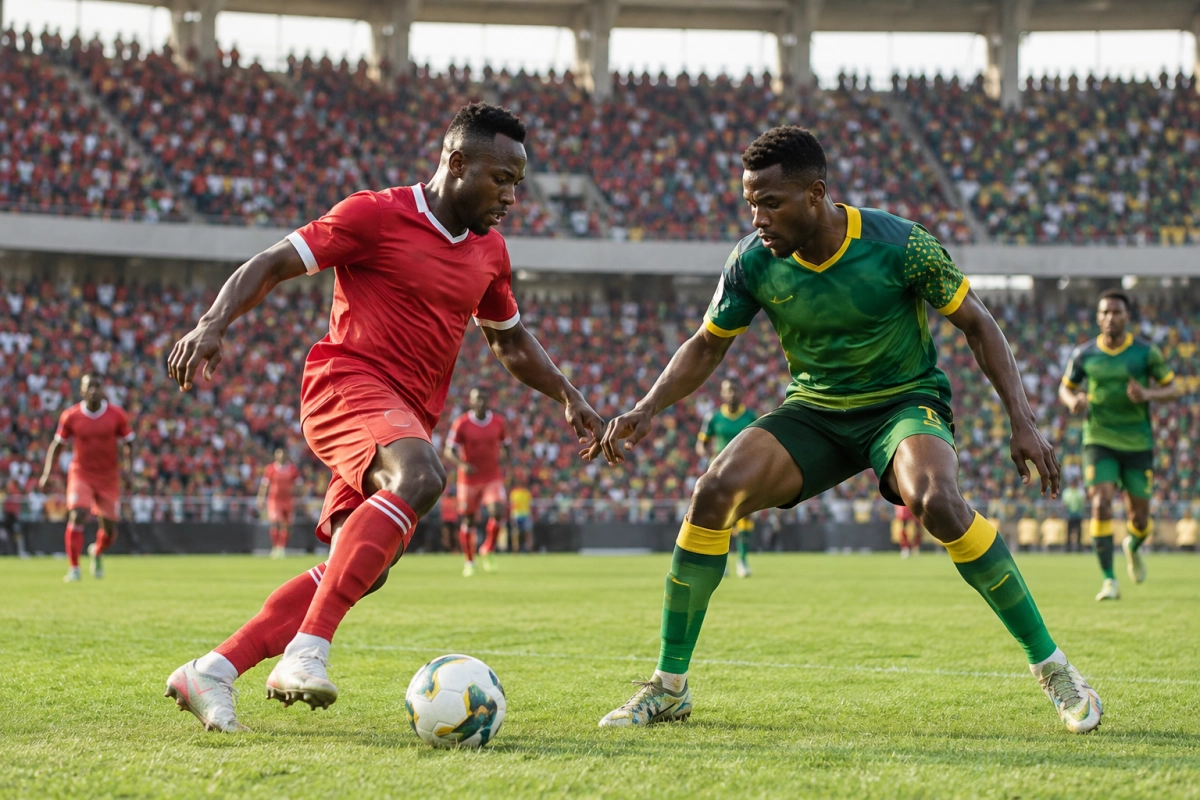
Every time Simba SC and Young Africans meet, the betting slip looks different from any other Tanzania Premier League betting fixture that week. The money comes in heavier, faster, and from a much wider pool of bettors, including people who barely follow the league otherwise. Bookmakers know this, and they price the match accordingly, not just based on form or head-to-head history.
In the October 2026 fixture, best available odds across books had Simba at 3.1, the draw at 3.05, and Young Africans at 2.7. Those numbers look balanced on the surface, but they are shaped as much by where the public money is landing as by what either side has actually done on the pitch. Simba came into that match on a 15-game winning run, yet the odds never drifted far enough to reflect total dominance, because too much volume was already stacked on one side of the market.
How Volume Changes the Way Bookmakers Set a Line
Mid-table fixtures rarely attract this kind of attention. A match between two clubs sitting in eighth and eleventh place might get a fraction of the bets a Big Two derby pulls in, which means bookmakers can price it closer to what their models actually calculate as fair odds. There is less pressure to manage liability, so the margin baked into the odds tends to be more predictable and less reactive.
With Simba and Young Africans, it works differently. Heavy one-sided volume forces bookmakers to protect themselves against a lopsided payout if the popular side wins. That often means padding the margin slightly wider on the favorite, shortening odds faster than form alone would justify, or capping how much liability they are willing to carry on a single outcome. None of this is unique to Tanzania, but the scale of public attention on these two clubs makes the effect more visible here than in leagues with a flatter distribution of fan interest.
What the Head-to-Head Numbers Actually Show
Historical results complicate the picture further. Over the last ten meetings between the two clubs, Simba have won just once, Young Africans have won four times, and five matches ended level. That record does not obviously support the kind of short favorite pricing Simba sometimes receives purely on the back of a current form run and fan-driven betting volume.
- Big Two fixtures: pricing influenced by volume, media attention, and liability management
- Mid-table fixtures: pricing closer to pure statistical models with lighter public betting pressure
- Outright markets: the same team can carry odds ranging from 10/1 to 16/1 depending on the bookmaker’s own exposure
Once you see how differently these two tiers of matches get priced, the next question becomes practical. If the derby is where the market is most distorted by crowd behavior, where on the rest of the table is the pricing actually closer to fair, and how do you find it before the rest of the market catches up.
Finding Value Away From the Derby Spotlight
The clearest opportunities tend to sit one tier below the headline fixtures, in matches involving teams like Coastal Union, Azam, or Singida Black Stars against mid-table opposition. These games draw a fraction of the betting volume, which means bookmakers have less incentive to shade their lines defensively. The odds on offer are closer to what a model built on actual form, injuries, and home advantage would produce, rather than what public sentiment demands.
This does not mean mid-table matches are easy money. It means the pricing errors, when they exist, are more likely to come from genuine analytical gaps rather than crowd-driven distortion. A bookmaker might simply have stale data on a team’s recent defensive improvement, or underweight the impact of a suspended playmaker, because fewer eyes and less betting pressure are forcing a correction. Spotting that kind of edge takes more homework than just watching where the money flows on derby day, but it rewards bettors willing to track squad news and tactical shifts across the full eighteen-team table rather than just the two biggest names.
Reading Market Movement as a Signal, Not Just Noise
There is a useful habit that follows from understanding how Big Two volume distorts pricing: watching how odds move in the hours before kickoff across different tiers of fixtures. For a Simba or Young Africans match, early line movement often says more about betting patterns than about new information. A sudden shortening of Simba’s odds on a Tuesday afternoon, three days before kickoff, is far more likely to reflect a surge of public backing than any tactical development at the club.
Mid-table fixtures behave differently. When odds move meaningfully in the day or two before a match, it is more often tied to something concrete, a confirmed lineup, a late injury, or weather affecting a particular ground. Learning to tell these two types of movement apart is arguably more valuable than any single statistic, because it tells you when a price shift is worth acting on and when it is simply the market absorbing emotional money.
- Early, gradual shortening on a Big Two favorite often reflects volume, not new form data
- Sharp, late movement on a mid-table fixture usually reflects genuine team news
- Comparing odds across several books on lower-profile matches often reveals more inconsistency, and therefore more opportunity, than comparing them on derby fixtures
Why Outright Markets Reward Patience Over Reaction
The same logic extends to season-long outright betting, where the gap in Simba’s quoted odds, from 10/1 to 16/1 depending on the book, is itself a kind of map. That spread exists because individual bookmakers carry different amounts of exposure to Simba backers from earlier in the season, and they adjust their outright prices to manage that liability rather than to reflect a fresh, independent assessment of title chances. A bettor who waits for a quiet week, away from derby fever, and shops across several platforms before committing to an outright position is far more likely to land on the inflated end of that range than one who bets in the emotional rush following a derby win.
Reading the Table Like the Market Does
Treat every fixture list as two separate markets running in parallel. One is driven by crowd psychology, television exposure, and decades of rivalry that no algorithm can fully price out. The other is quieter, governed more by injuries, squad depth, and home form than by how many people are watching. Once that distinction becomes second nature, the Tanzania Premier League stops looking like one uniform competition and starts looking like what it actually is: a handful of heavily scrutinized derbies surrounded by eighteen teams’ worth of underpriced detail.
None of this requires abandoning interest in Simba or Young Africans. Their matches will keep drawing volume, and that volume will keep shaping the odds in ways that reward patience rather than instinct. But the sharper long-term approach is to split attention across the table, using derby-day pricing as a lesson in market behavior rather than the only opportunity worth chasing. For bettors who want a deeper grounding in how staking strategy should shift between these two tiers of fixtures, resources like Pinnacle’s betting resources offer useful context on how professional markets handle liability and public bias more broadly. Applied to the Tanzanian top flight, the principle holds either way: the biggest match of the week is rarely where the best price is hiding.