Why the Live Price You See Is Rarely the Price You Get
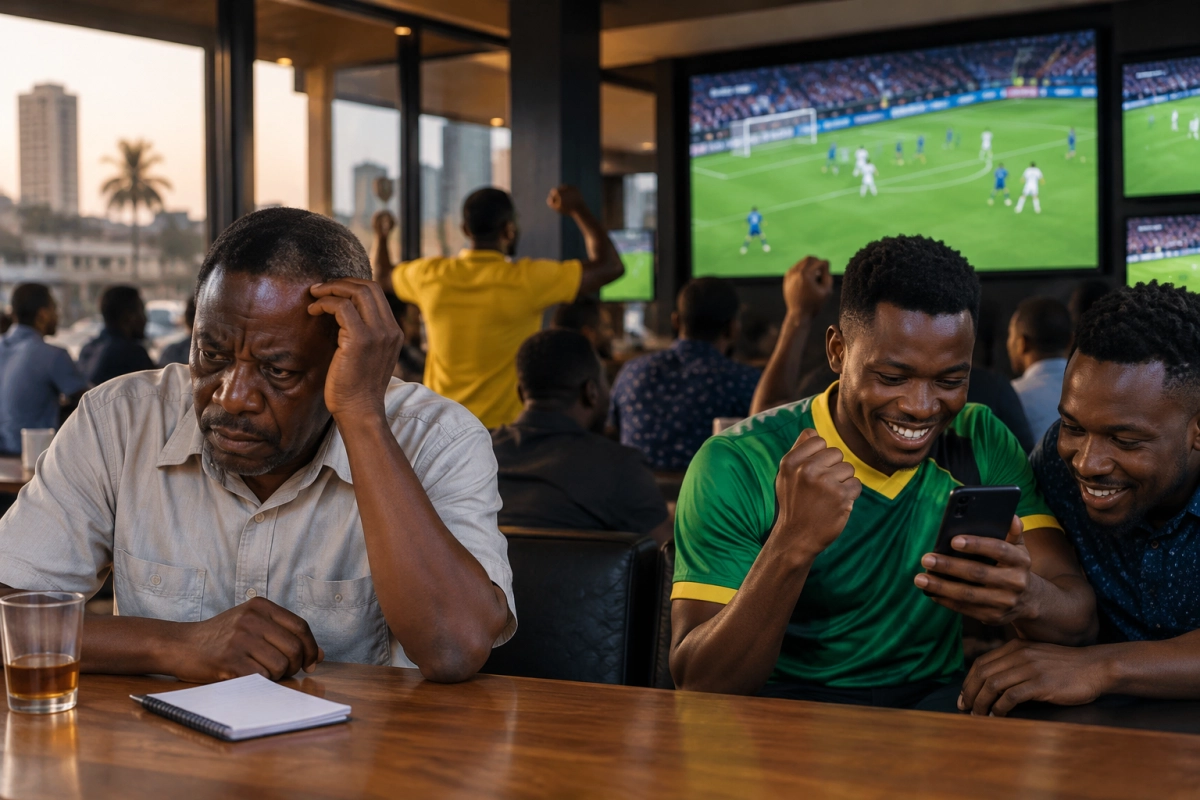
A goal goes in, you tap the new odds within seconds, and the slip comes back with “odds changed” or “bet rejected.” Most bettors blame the bookmaker. The real cause is usually a chain of small delays that all work against the person holding the phone.
Three delays between the pitch and your bet slip
The first delay is the data feed. Events reach the operator through a scouting or data provider, and the operator’s traders then reprice. The second is the suspension, a server-side decision to freeze a market while that repricing happens. The third is your own connection, which decides how quickly the new price reaches your screen and how quickly your stake reaches the server.
Notice that the TV broadcast is a separate delay again. What you watch can run behind the operator’s data, so the match you see is already history to the trading desk.
Where Mobile Networks Quietly Cost You Value
Bet acceptance lag on weak connections
When your signal drops from 4G to a patchy 3G connection, the odds on your screen can be several seconds old. You are then confirming a price that no longer exists. Sometimes the bet is rejected, which costs you only time. Sometimes it is accepted at a worse price, or the app asks you to re-confirm, and by then the market has moved again.
Low-cost Android phones with heavy background apps make this worse. A slow-refreshing app can show you a price long after the operator has changed it.
Chasing goals right after a score change
The minutes after a goal are where live bettors leak the most. Prices swing hard, your emotions swing with them, and you are under pressure to act before the market closes. Traders have already repriced for the new score and the shifted game state, so the “obvious” bet on a late equaliser or a second goal is often already built into the odds.
Suspended markets and cash-out pricing
A suspension is not a malfunction. It happens around goals, cards, penalties and dangerous attacks, and it can arrive in the middle of your confirmation. Cash-out follows the same logic. The offer is calculated from the live price minus the operator’s margin, so it is always below the bet’s fair value. A cash-out request can also fail if the price moves or the market suspends while it processes, which is exactly when you most want it to work.
Premier League and NBC Premier League Are Different Live Products
A Premier League match has heavy broadcast coverage, fast data and plenty of traders watching it. Live prices there react quickly and tend to be sharper. That works against you if your connection is slower than the market.
NBC Premier League matches are a different problem. Broadcast coverage is limited, data feeds can be thin, and score updates may lag behind what is happening at the ground. Fewer live markets are usually offered, and you often cannot verify what you are betting on. If you cannot see the game, you are relying on a scoreboard that may be a step behind, and your read of the match is borrowed from a feed you cannot check.
So the risk changes shape. On the Premier League you fight speed. On local matches you fight missing information. Knowing which fight you are in is the first step toward deciding when live betting is worth the cost, and that is where the decision framework in the next section begins.
A Practical Framework: When Live Betting Earns Its Place
Live betting is not better or worse than pre-match. It is a different tool with a higher cost of use. The question to ask before every live bet is simple: what do I know right now that the price has not caught up with, and can I act on it before it does?
Three questions to ask before you tap
- Can I see the match, or only the scoreboard? If you are watching a reliable stream or broadcast, you can judge pressure, injuries and tactical changes. If you only have a score line, you have the same information as everyone else, and later.
- Is my connection stable enough to confirm this bet? If the app hesitates, reloads or flips between network types, the price on screen is a guess. Wait for a steady connection or skip the bet.
- Would I place this bet if the score had not just changed? If the only reason is the goal you just saw, you are reacting, not analysing.
If any answer is no, the bet usually belongs on the pre-match side of the line, or nowhere.
Where Live Betting Makes Sense, and Where It Does Not
Situations that favour live betting
The best live opportunities tend to be slow-burning ones. A Premier League side that has dominated for twenty minutes without scoring, a red card that changes the shape of a game, or a key player limping off are situations you can read calmly. You are not racing the trading desk. You are waiting for a moment when your judgment on the game’s direction differs from the price, and then confirming on a steady connection.
Live betting also helps when you wanted a pre-match price that was not available. Sometimes a favourite drifts after a quiet opening, and a patient bettor gets better value in-play than at kick-off.
Situations that favour pre-match
Pre-match is stronger whenever your edge comes from preparation: team news, fixture congestion, form over several weeks, or knowledge of how a particular side plays away. Those advantages do not expire in the first ten minutes, and the bet is not exposed to suspensions, rejections or lag.
For NBC Premier League matches, pre-match often wins by default. With thin data and little broadcast coverage, you cannot verify the live picture, and a feed delay can make a “live” price older than it looks. Your local knowledge of teams, venues and conditions is more useful before kick-off than during a match you cannot watch.
Small Habits That Protect Your Stake
You do not need a complex system, just a few disciplines. Decide your maximum live stake before the match starts, and keep it smaller than your pre-match stake. Set a rule against placing a bet in the two minutes after a goal, when prices are most volatile and your judgment is weakest. Close background apps and check your signal before a match you plan to bet on.
Treat cash-out as a decision to be made calmly, not a rescue button. If you would not place the opposite bet at the current price, ask why you are accepting a margin-reduced offer to exit. Often the answer is nerves, not value.
Choosing Your Moment Is the Real Edge
In-play betting rewards patience far more than speed. On a mobile network in Tanzania, you will rarely beat the trading desk to a price, and you do not need to. The bettors who keep their value are the ones who pick their spots: a Premier League match they can actually watch, a connection they can trust, and a read on the game that existed before the last goal went in.
When those conditions are missing, stepping back is a good decision. A pre-match bet placed calmly on team news and form will often beat a live bet placed in a hurry on a stale price. That is especially true for NBC Premier League fixtures, where the scoreboard may trail the match and your own local knowledge counts for more before kick-off than during play.
Keep the framework simple. Know which fight you are in, ask what you know that the price does not, and let the rest go. Betting should stay within limits you set in advance, and if it stops feeling that way, free, confidential help is available through Gambling Therapy. The best live bet is often the one you decide not to place.